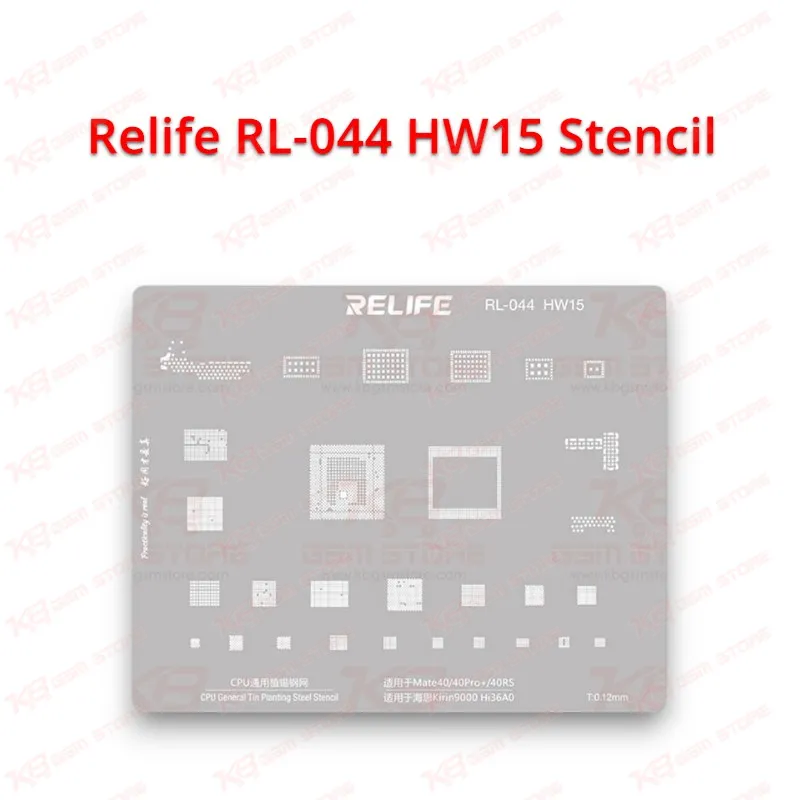
Working on a Huawei board with a suspected CPU fault or a chip that needs reballing after IC change karna calls for a stencil that matches the exact pad layout, and the Relife RL-044 HW15 Stencil is built for that specific job within the RL-044 Huawei series lineup that spans HW1 through HW16 for full coverage across HiSilicon Kirin CPU packages and other common fault ICs found on Huawei motherboards. Build and Material the mesh is laser-cut from high-quality stainless steel, thin enough to sit flush against the board yet tough enough to hold its shape after repeated hot air cycles, so you are not replacing stencils every few jobs the way you would with cheaper punched alternatives. Hole Design RELIFE uses a round and square mesh hole pattern on the RL-044 series that lets solder paste release cleanly during reballing instead of clogging inside the apertures, which cuts down on the smearing and bridging that ruins a reball attempt halfway through, and the half-etching process around select areas creates a groove that keeps adjacent components clear of direct heat, protecting nearby passives from burn damage while you work the target IC. Thermal Stability because Huawei CPU reballing usually means several passes under a hot air station before the paste sits evenly, the stencil is engineered against buckling and warping at soldering temperatures, so alignment on your second or third attempt stays as tight as your first pass, which matters when you are chasing a dead phone or hang on logo fault back to a working motherboard. Workflow Fit this stencil slots into the same reballing station setup you already run with your ISP pinout tools, hot air rework station, and microscope, and it pairs naturally with a BGA reballing kit, flux, and solder balls sized for Kirin packages, meaning your existing bench setup for Huawei-side board repair does not need extra adapters to use it. Practical Use you place the mesh over the cleaned pad, tack it in position, apply solder paste or drop balls through the apertures, then lift the stencil once the pattern sets, and because the hole spacing on the HW15 layout is dedicated to a specific Huawei chip footprint rather than a generic universal grid, your alignment time drops compared to eyeballing a reball by hand. Durability the stainless construction and double blister packaging it ships in keep the mesh flat during storage and transit, so it stays ready to use straight out of the pack instead of needing to be flattened or trimmed before your first job, which matters on a busy repair bench where downtime between jobs costs money. For a shop doing regular Huawei board level work, having the correct HW-series layout on hand alongside your iPhone and Samsung stencils means fewer failed reballs and less rework, and the Relife RL-044 HW15 Stencil earns its place in that toolkit by matching a real Huawei chip footprint rather than forcing a universal pattern onto a board it was never cut for.