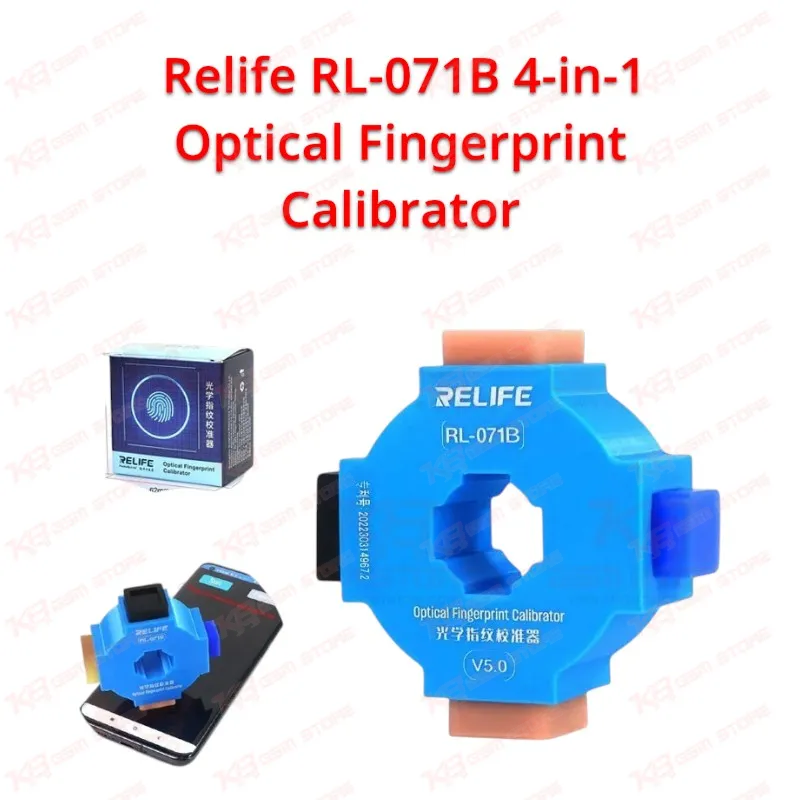
Fingerprint issue after a screen job is one of the most common comebacks in a repair shop, and most of the time the phone itself is fine — the optical fingerprint sensor just lost its calibration reference the moment the original panel came off, because every OLED or LCD unit has slightly different light absorption and reflection properties than the exact panel the sensor was originally trained against, and the Relife RL-071B 4-in-1 Optical Fingerprint Calibrator exists specifically to close that gap by giving the sensor four distinct reference surfaces that simulate the texture, light reflection, and depth patterns different manufacturer calibration protocols expect to see. You reinstall the new screen first, boot the device, open the calibration software the tool works alongside, and place the phone against the matching surface on the RL-071B so the fingerprint module can relearn its baseline instead of continuing to throw an enrollment error or reading fingerprints slowly and inconsistently. On Huawei, Xiaomi, OPPO, and Vivo models built around optical in-display sensors, this single step usually clears the problem without opening the board again or ordering a replacement fingerprint flex, which matters a lot when a customer is already annoyed about paying twice for the same repair. The four-in-one design is what makes it useful across a mixed workload, since different brands run different calibration routines in their service software, and having one compact tool that covers all four instead of stocking separate single-purpose calibrators keeps your bench simpler and your turnaround faster. Because calibration happens through software rather than a hardware fix, many jobs don't need the phone fully stripped down again — you're working with the display already seated, which cuts the time spent per unit compared to re-opening the chassis to inspect the sensor flex or connector every time a customer reports the same complaint. Built compact at roughly 73×72×25mm and around 65 grams, it sits easily in a tool drawer or a technician's carry case, so it travels well between a fixed bench and on-site service calls without adding real bulk to your kit. Recognition accuracy on the RL-071B has been validated against real devices rather than lab claims alone, which is the detail that actually matters when you're deciding whether a tool earns a permanent spot next to your soldering station and test boxes. For a service center handling steady screen-replacement volume, this calibrator turns a recurring, frustrating callback into a five-minute step you run before handing the phone back, and it holds up across repeated use since it's a reusable reference tool rather than a one-time consumable, which makes the Relife RL-071B a sensible addition to your screen-repair workflow whether you're running a single bench or managing several technicians on the same floor.