


U2 SN2012027 +8N( Q4EE) Eeprom Charging IC
U2 SN2012027 +8N( Q4EE) Eeprom Charging IC
Regular price
Rs.3,000.00 PKR
Regular price
Sale price
Rs.3,000.00 PKR
Shipping calculated at checkout.
Quantity
Couldn't load pickup availability
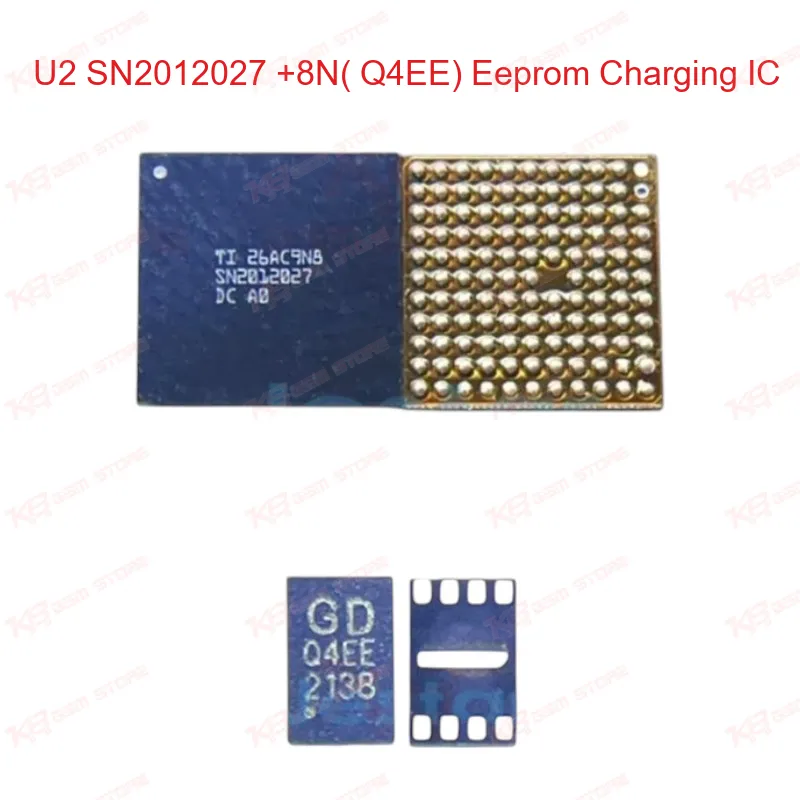
This U2 SN2012027 +8N Q4EE EEPROM Charging IC Set gives you the exact two-chip combo needed to bring back charging and touch function on iPhone 15 and 16 series boards. The set pairs the SN2012027 U2 charging IC with a pre-programmed 8N Q4EE EEPROM chip, so you can fix a dead charging port whether the original EEPROM data is intact or already lost. Built for board-level GSM work, this set saves you a diagnostic step — install the U2 first, and only swap the EEPROM if the phone still won't wake up. A must-have for any repair bench handling iPhone 15/16 charging faults.
⚖️ Weight: 0.01 kg
SKU:MST-IC-373
- Safe & Secure Payment
- Fast Delivery
- WhatsApp Support


Description
FAQ
What is the product name?
The product name is U2 SN2012027 +8N Q4EE EEPROM Charging IC Set.
What is the model of this product?
The model is SN2012027 paired with the 8N Q4EE EEPROM chip.
What is this product used for?
This set is used to repair dead charging and touch failure faults caused by U2 or EEPROM chip damage.
Which devices are compatible with this product?
This set is compatible with iPhone 15, 15 Plus, 15 Pro, 15 Pro Max, and the full iPhone 16 series.
Who should use this product?
This product is suitable for mobile repair technicians, repair shops, service centers, and professional GSM technicians.
Do I need to replace both chips or just the U2?
If the EEPROM data on the board is still intact, replacing the U2 alone restores charging; if the data is lost, you need to replace both the U2 and the EEPROM together.
Can this IC set fix touch not working along with no charging?
Yes, since touch failure on iPhone 15/16 boards often shares the same power circuit as the U2 charging IC, replacing this set commonly restores both charging and touch function together.