


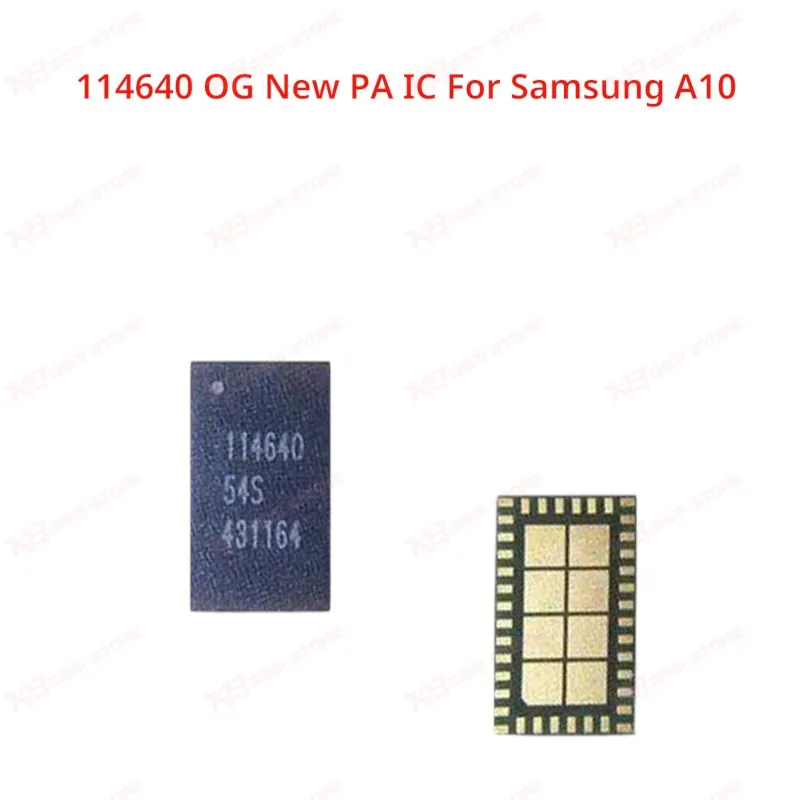
114640 OG New PA IC For Samsung A10
114640 OG New PA IC For Samsung A10
Regular price
Rs.400.00 PKR
Regular price
Sale price
Rs.400.00 PKR
Shipping calculated at checkout.
Quantity
Couldn't load pickup availability
The 114640 PA IC is the power amplifier chip used in the RF transmit path of the Samsung Galaxy A10 (SM-A105F) and the Galaxy J4 / J4 Plus (SM-J415) boards. This OG grade IC boosts the outgoing signal before it reaches the antenna, so it directly affects network strength, call stability, and mobile data performance. When your bench shows weak signal, dropped calls, no network, or signal that comes and goes after a drop or liquid exposure, this chip is one of the first suspects on the board. Fit it with a hot air station and proper reballing technique for a clean, direct-fit repair without hunting for a donor board.
⚖️ Weight: 0.01 kg
SKU:MST-IC-179
- Safe & Secure Payment
- Fast Delivery
- WhatsApp Support


Description
FAQ
What is the product name?
The product name is 114640 OG New PA IC For Samsung A10.
What is the brand of this product?
This is a genuine Samsung-sourced power amplifier IC, OG grade.
What is the model of this product?
The model/part number is 114640.
What is this product used for?
It's used to repair network and signal faults on the RF transmit path of compatible Samsung boards.
Which devices are compatible with this product?
It's compatible with the Samsung Galaxy A10 (SM-A105F), Galaxy J4 (SM-J415), and Galaxy J4 Plus.
Who should use this product?
Mobile repair technicians, GSM repair shops, and service centers doing board-level Samsung repairs.
Does the 114640 IC fix a phone stuck on "no service" after a flash?
If the fault survives a fresh flash and factory reset, a bad PA IC is a common hardware cause and this chip addresses that specific fault.
Can this IC be fitted without a hot air rework station?
No — the 114640 needs a controlled hot air reballing process; a soldering iron alone can't achieve an even reflow on a BGA-style PA package.