


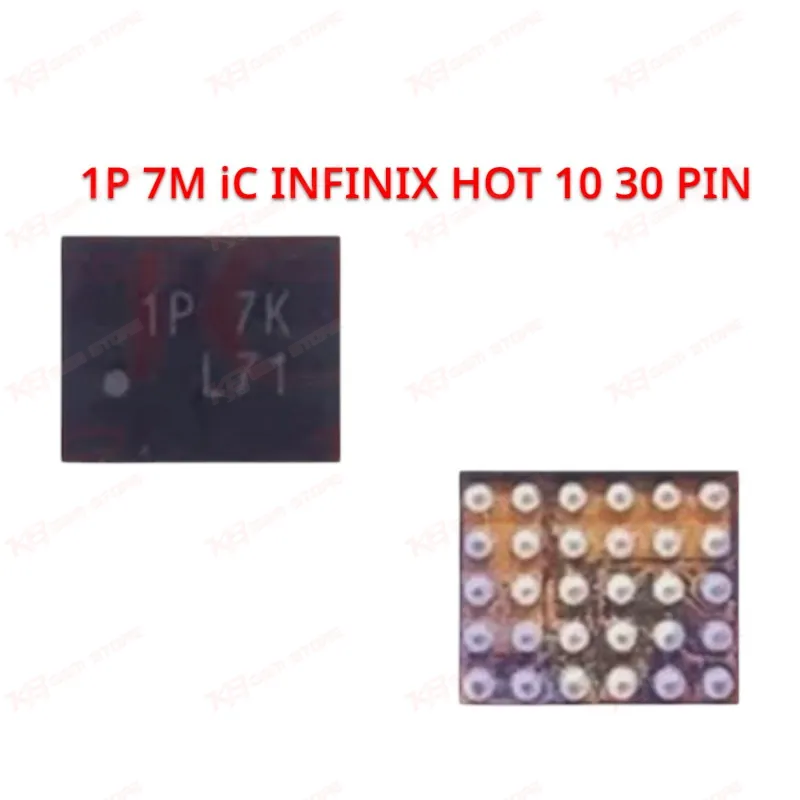
1P 7M iC INFINIX HOT 10 30 PIN
1P 7M iC INFINIX HOT 10 30 PIN
Regular price
Rs.300.00 PKR
Regular price
Sale price
Rs.300.00 PKR
Shipping calculated at checkout.
Quantity
Couldn't load pickup availability
The 1P 7M charging IC is a dedicated power management chip built for Infinix Hot 10 series boards with the 30 pin charging connector. Technicians use this IC to fix dead charging, no power, and slow charging faults where the phone shows no response after connecting the charger. It controls voltage regulation and current flow between the charging port and the main board, making it a core replacement part for charging port repair and board-level diagnostics. Suitable for GSM repair shops, service centers, and mobile hardware engineers handling Infinix charging faults on a daily basis at the repair bench.
⚖️ Weight: 0.01 kg
SKU:MST-IC-346
- Safe & Secure Payment
- Fast Delivery
- WhatsApp Support


Description
FAQ
What is the product name?
The product name is 1P 7M Charging IC for Infinix Hot 10.
What is the brand of this product?
This IC is designed for use in Infinix branded devices.
What is the model of this product?
The model is the 1P 7M charging IC, 30 pin variant.
What is this product used for?
It is used to repair dead charging and no-power faults on Infinix Hot 10 boards.
Which devices are compatible with this product?
It is compatible with Infinix Hot 10 series boards that use the 30 pin charging connector.
Who should use this product?
This IC is suitable for mobile repair technicians, repair shops, service centers, and professional hardware engineers.
Does this IC support both slow and fast charging boards?
It is built to match the Infinix Hot 10 30 pin charging architecture, so it supports the charging behavior defined by that board's original circuit design.
Can this IC fix a phone that shows dead after charger connection with no software fault?
Yes, when diagnostics confirm the fault sits on the power line rather than software, replacing this IC restores charging function.