


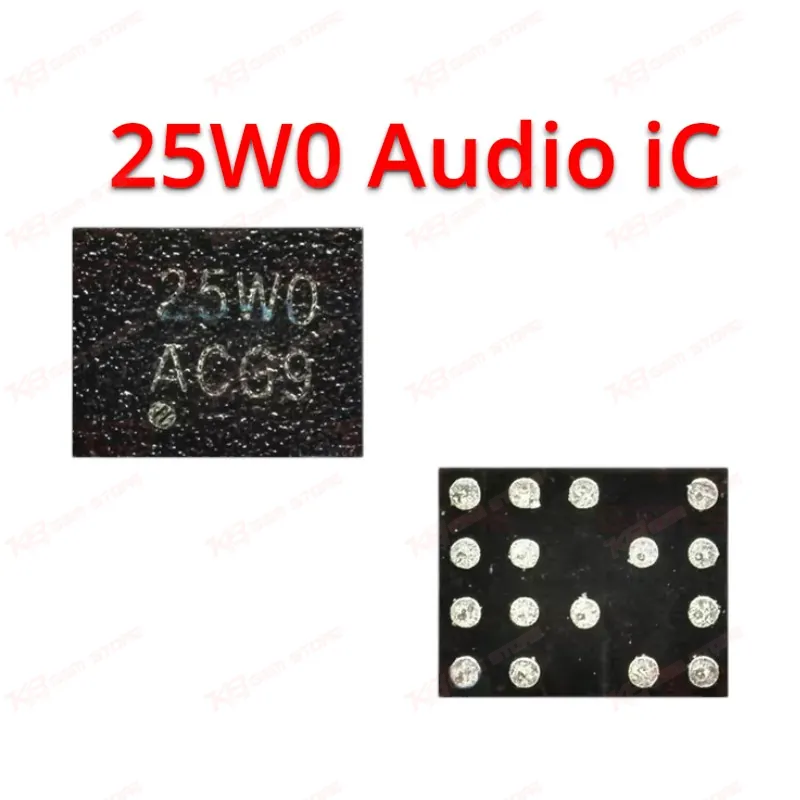
25W0 Audio iC
25W0 Audio iC
Regular price
Rs.250.00 PKR
Regular price
Sale price
Rs.250.00 PKR
Shipping calculated at checkout.
Quantity
Couldn't load pickup availability
The 25W0 Audio IC is a replacement audio chip used on mobile phone motherboards to restore sound function on boards facing dead audio, no mic, or speaker faults. Technicians reach for this IC when a phone shows signs of audio issue after liquid damage, board short, or a failed reflow attempt. It sits in the audio signal path, handling how sound moves between the mic, earpiece, and speaker circuits. On your repair bench, this chip becomes useful once you've already ruled out a physical speaker or mic fault and traced the problem back to the IC itself. Ideal for GSM repair shops, board-level technicians, and service centers doing chip-level work.
⚖️ Weight: 0.01 kg
SKU:MST-IC-350
- Safe & Secure Payment
- Fast Delivery
- WhatsApp Support


Description
FAQ
What is the product name?
The product name is the 25W0 Audio IC.
What is this product used for?
This IC is used to repair dead audio, no mic, or no speaker faults on mobile phone motherboards at the chip level.
Which devices are compatible with this product?
Compatibility depends on the original board's chip marking — confirm the exact IC marking on the faulty board before ordering, since this isn't verified as device-specific.
Who should use this product?
This product suits mobile repair technicians, GSM service centers, and repair shops doing board-level microsoldering work.
Can this IC be installed with a regular soldering iron?
No — installation requires a hot air rework station and proper reballing, since the chip uses a BGA-style pad layout typical of mobile audio ICs.
Should I replace the IC before checking the board traces?
No — check continuity on the audio lines and inspect for corrosion first, since a broken trace or lifted pad is a common cause mistaken for IC failure.