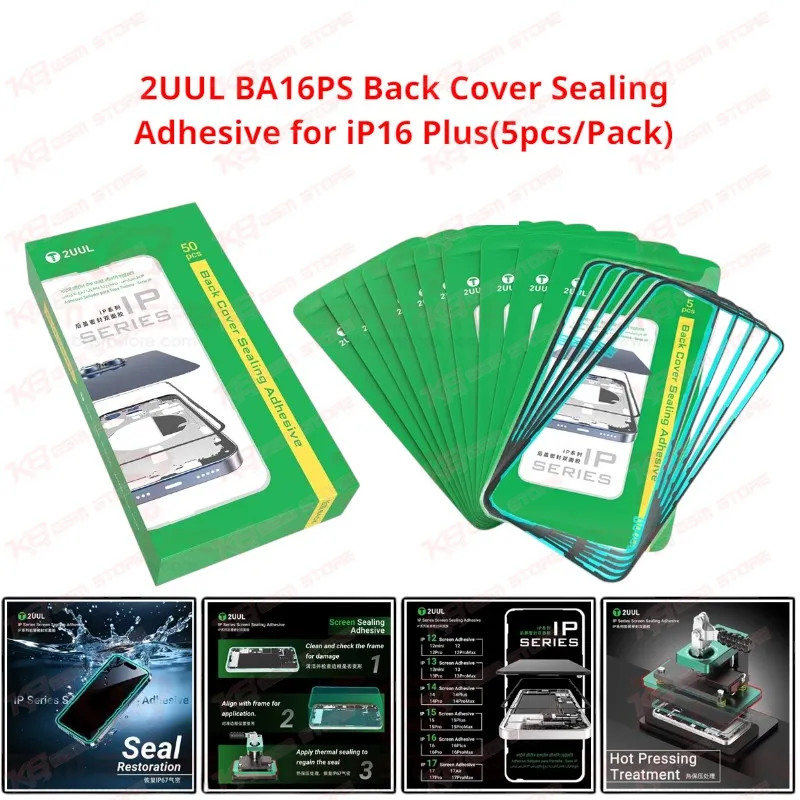
When you open an iPhone 16 Plus to replace a battery, fix a charging port, or swap out a cracked back glass, you can't reuse the old adhesive — it loses grip and won't hold the seal properly the second time, which is exactly the gap the 2UUL BA16PS fills. This pre-cut sealing strip is shaped specifically for the iPhone 16 Plus frame, so you skip the guesswork of measuring and slicing generic adhesive tape on your repair bench. On a busy workshop day, that saved time adds up, especially when you're running back-to-back back cover jobs and don't want to eyeball alignment on every single unit. The 5-piece pack means you're not restocking after every second repair, which matters if you handle iPhone 16 Plus units regularly as part of your service center's workload. A poorly sealed back cover isn't just a cosmetic issue — it directly affects the phone's resistance to dust and moisture, and a customer who comes back a week later with a "water damage" complaint traces straight back to a rushed reseal job. Using a properly fitted adhesive strip like this one reduces that risk and protects your shop's reputation for quality work. In terms of where this fits in your repair workflow, it comes into play right at the reassembly stage — after you've finished the internal repair (battery, charging flex, camera module, or whatever brought the device to your bench) and you're ready to close up the back glass. Clean the frame edge of old adhesive residue first; leftover glue residue is one of the most common reasons a new seal fails to bond properly, so don't skip that step even when you're in a hurry. Press the BA16PS strip evenly around the perimeter, then apply firm, even pressure across the back glass to set the bond — rushing this part is how technicians end up with a back cover that lifts at one corner within days. This product sits squarely in the mechanical reassembly side of mobile repair rather than the diagnostic or software side, but it still matters for a shop's overall service quality, especially for customers who care about their phone staying dust and splash resistant after a repair. For Pakistani repair shops, this is the kind of item you keep in stock alongside your other back cover reseal tools, right next to your heat gun, pry tools, and suction cups — because an iPhone repair isn't complete until the seal is done right, not just until the internal fault is fixed. If you're a technician who repairs a mix of dead phone units, battery swaps, and charging port fixes for iPhone 16 Plus specifically, having a dedicated adhesive on hand instead of relying on cut-to-size generic tape keeps your turnaround consistent from job to job. It's a small, inexpensive part of the repair, but it's also one of the parts customers notice fastest if it's done wrong — a loose or crooked back cover is visible the moment they pick the phone up. Keeping a stock of model-specific adhesive like the BA16PS is one of those quiet quality-control habits that separates a shop technicians trust with repeat business from one that gets one-time customers only.