


Brand:
2UUL
2uul BH31 The Smile JIG Fixture
2uul BH31 The Smile JIG Fixture
Regular price
Rs.4,500.00 PKR
Regular price
Sale price
Rs.4,500.00 PKR
Shipping calculated at checkout.
Quantity
Couldn't load pickup availability
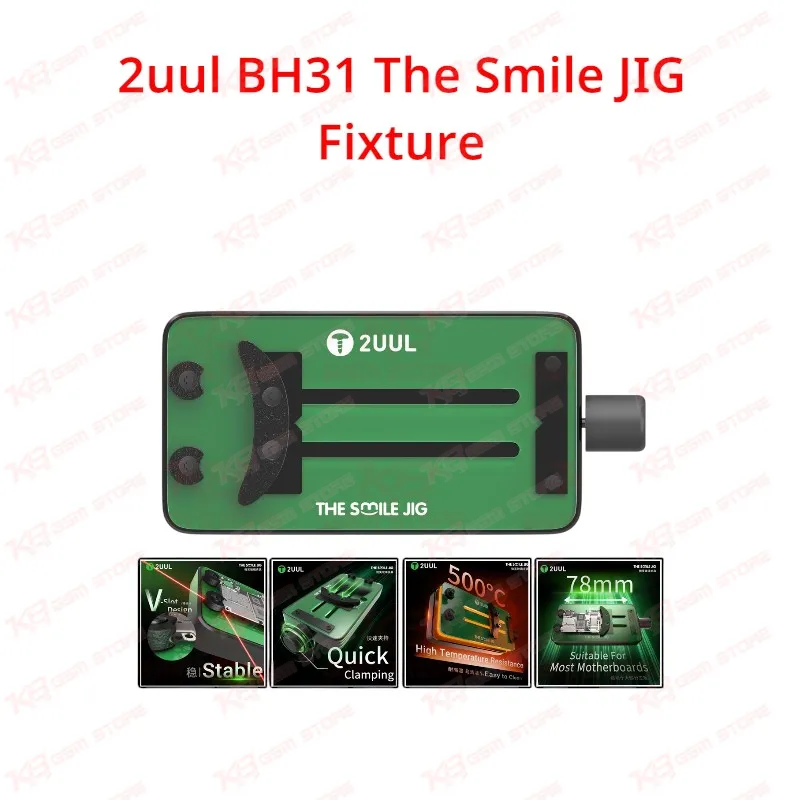
The 2UUL BH31 Smile JIG holds mobile phone motherboards and IC chips firmly in place during soldering, reballing, and board-level repair work. Its V-shaped clamp and non-slip base stop the board from shifting while you work on a dead phone or a hardware fault. Built from heat-resistant alloy rated up to 500°C, it survives constant contact with your hot air station and soldering iron without warping. At 135 x 63 x 17mm and 245g, it sits comfortably on any repair bench and clamps boards from most phones and tablets. Technicians use it for CPU and NAND reballing, FPC soldering, and general IC change work where a steady grip matters.
SKU:MST-SOLDERING-ACCESSORIES-765
⚖️ Weight: 0.4 kg
- Safe & Secure Payment
- Fast Delivery
- WhatsApp Support


Description
FAQ
What is the product name?
The product name is 2UUL BH31 The Smile JIG Fixture.
What is the brand of this product?
The brand of this product is 2UUL.
What is the model of this product?
The model of this product is BH31.
What is this product used for?
This product is used for holding mobile phone motherboards and PCBs steady during microsoldering, IC reballing, and board-level repair work.
Which devices are compatible with this product?
This product is universal and works with motherboards and PCBs from most mobile phones and tablets, not limited to a specific brand or model.
Who should use this product?
This product is suitable for mobile repair technicians, repair shops, service centers, and professional users.
Can this jig handle high soldering temperatures without damage?
Yes, the alloy body is rated to withstand temperatures up to 500°C, so it stays stable during hot air rework and reballing.
Does this fixture work for CPU and NAND IC reballing?
Yes, the V-slot clamp holds boards firmly enough for precise CPU, NAND, and WiFi IC reballing work.