


Brand:
2UUL
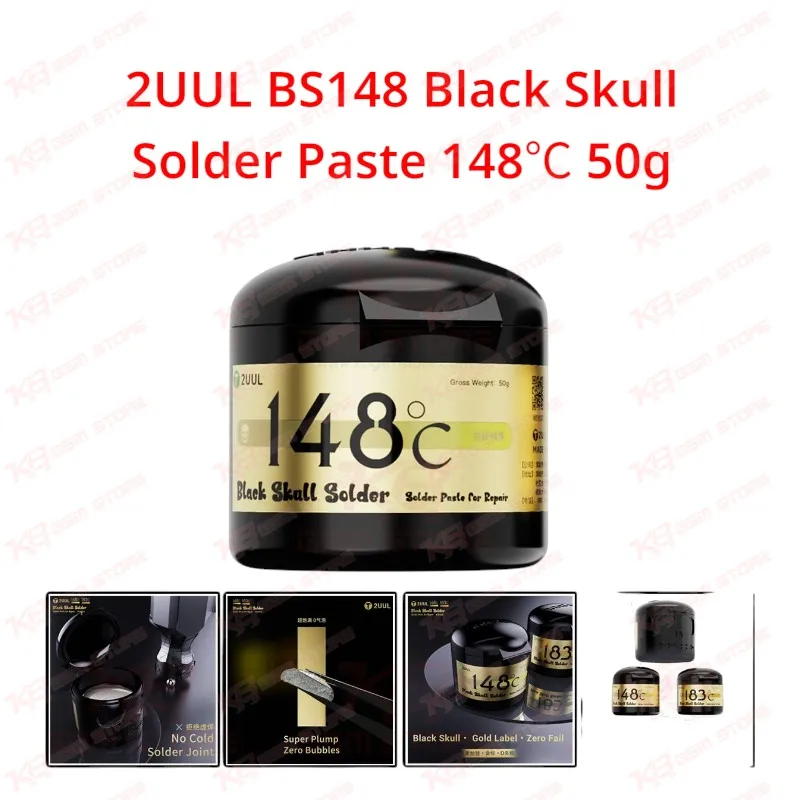
2UUL BS148 Black Skull Solder Paste 148℃ 50g
2UUL BS148 Black Skull Solder Paste 148℃ 50g
Regular price
Rs.1,600.00 PKR
Regular price
Sale price
Rs.1,600.00 PKR
Shipping calculated at checkout.
Quantity
Couldn't load pickup availability
2UUL BS148 Black Skull Solder Paste is a 148°C low-temperature solder paste built for BGA, CPU, and IC reballing work on dense multilayer boards. Its low reflow point keeps heat exposure short during rework, so nearby components and pads stay safe from thermal stress. The 50g jar gives you enough paste for repeated reballing, jumper work, and short-pin soldering on iPhone, Samsung, and other tightly packed motherboards. Technicians use it where board temperature control matters most — layered boards, CPU reballing, and delicate IC removal jobs where standard high-temp paste risks lifting pads or damaging surrounding ICs.
SKU:MST-SOLDERING-ACCESSORIES-770
⚖️ Weight: 0.05 kg
- Safe & Secure Payment
- Fast Delivery
- WhatsApp Support


Description
FAQ
What is the product name?
The product name is 2UUL BS148 Black Skull Solder Paste 148°C 50g.
What is the brand of this product?
The brand of this product is 2UUL.
What is the model of this product?
The model of this product is BS148.
What is this product used for?
This product is used for low-temperature reflow soldering, including CPU/BGA reballing, jumper repair, and board-level rework.
Which devices are compatible with this product?
This product is compatible on a universal basis with multilayer smartphone motherboards such as iPhone and Samsung boards where low-temperature reflow is needed.
Who should use this product?
This product is suitable for mobile repair technicians, repair shops, service centers, and professional users.
Does BS148 solder paste work for CPU reballing on iPhone boards?
Yes, its 148°C reflow point makes it a common choice for CPU and BGA reballing on iPhone and similar dense-layout boards where reduced heat exposure matters.
Why use 148°C paste instead of standard high-temperature solder paste?
Lower reflow temperature reduces the risk of lifted pads, delaminated layers, and damage to nearby ICs on boards that have already been through prior repairs.