


Brand:
2UUL
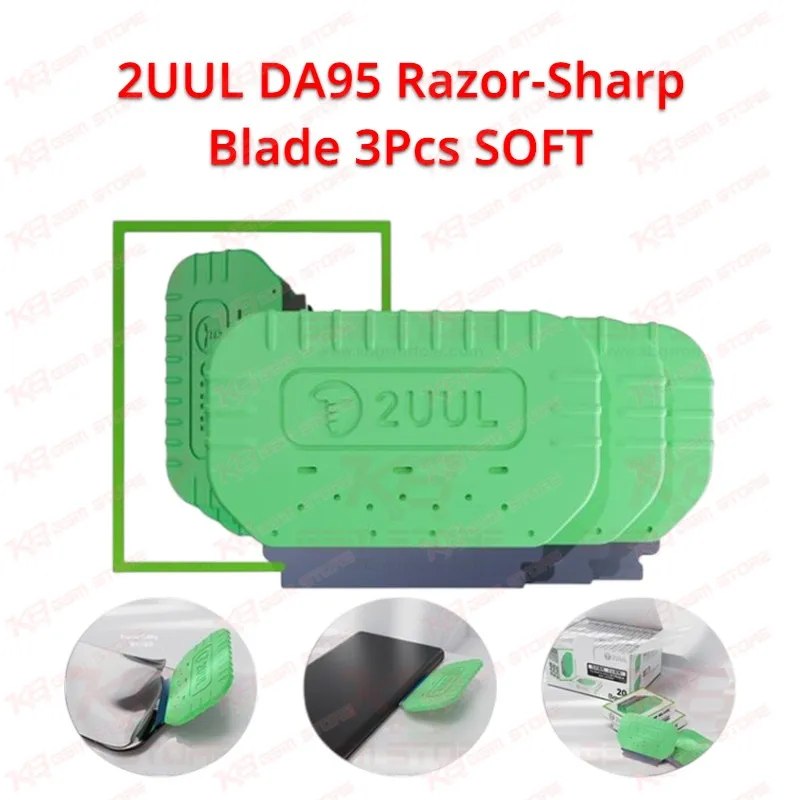
2UUL DA95 Razor-Sharp Blade 3Pcs SOFT
2UUL DA95 Razor-Sharp Blade 3Pcs SOFT
Regular price
Rs.600.00 PKR
Regular price
Sale price
Rs.600.00 PKR
Shipping calculated at checkout.
Quantity
Couldn't load pickup availability
The 2UUL DA95 Soft Blade set gives you three razor-sharp, flexible prying blades built for screen separation, polarizer cutting, and adhesive line splitting on your repair bench. The soft blade profile slides into tight display gaps without gouging frames or cracking glass edges, so you get cleaner screen removal on phones, tablets, and laptops. Pair it with your heat gun or hot air station to soften adhesive first, then let the DA95 do the precision work. A practical, low-cost addition to any Pakistani repair shop's daily toolkit for screen jobs, back-glass separation, and polarizer trimming.
SKU:MST-SOLDERING-ACCESSORIES-452
⚖️ Weight: 0.03 kg
- Safe & Secure Payment
- Fast Delivery
- WhatsApp Support


Description
FAQ
What is the product name?
The product name is 2UUL DA95 Razor-Sharp Blade (Soft), a 3-piece set.
What is the brand of this product?
The brand of this product is 2UUL.
What is the model of this product?
The model of this product is DA95.
What is this product used for?
This product is used for screen gap separation, polarizer film cutting, and screen prying during display removal.
Which devices are compatible with this product?
This product is universal and not device-specific, so it works across smartphones, tablets, and laptops during screen and back-glass repair.
Who should use this product?
This product is suitable for mobile repair technicians, repair shops, service centers, and professional users.
Is the DA95 soft blade safe to use on curved-edge OLED screens without cracking the glass?
The soft, flexible profile follows the curve of edge-to-edge displays better than a rigid blade, but you still need to soften adhesive with heat first and avoid forcing the blade against the glass surface.
Can the 2UUL DA95 soft blade cut polarizer film without damaging the LCD panel underneath?
The sharp edge is built for controlled, shallow cuts through polarizer film, so you get a clean trim as long as you keep the angle low and avoid pressing deep enough to contact the panel below.