


Brand:
2UUL
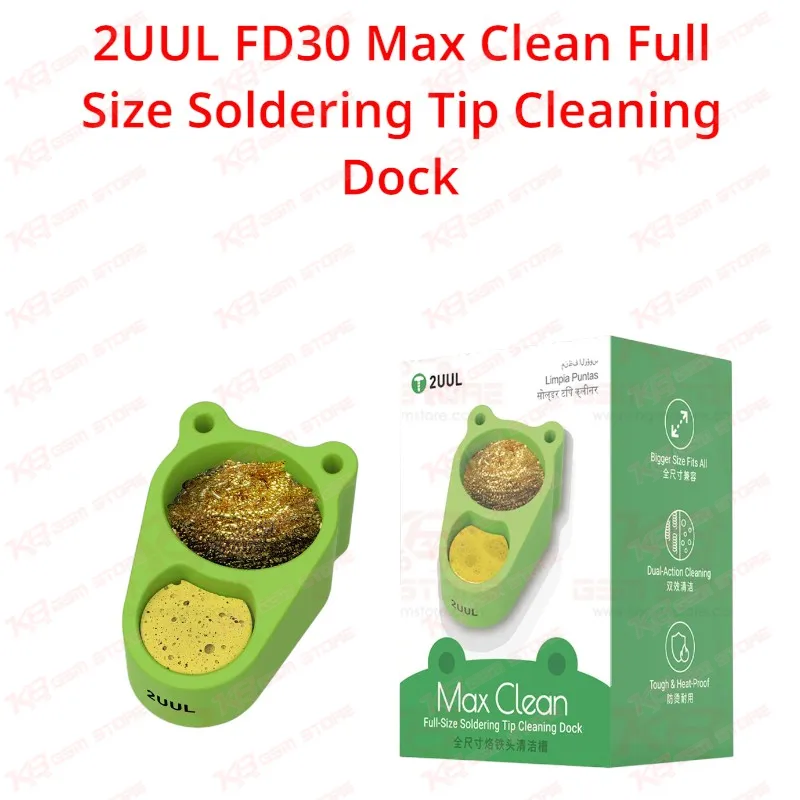
2UUL FD30 Max Clean Full Size Soldering Tip Cleaning Dock
2UUL FD30 Max Clean Full Size Soldering Tip Cleaning Dock
Regular price
Rs.1.00 PKR
Regular price
Sale price
Rs.1.00 PKR
Shipping calculated at checkout.
Quantity
Couldn't load pickup availability
The 2UUL FD30 Max Clean is a full-size dry-type soldering tip cleaning dock built for technicians who solder on a daily basis. Instead of a wet sponge that shocks the tip and drops its temperature, this dock uses dry cleaning action to strip oxidation and old solder residue while the iron stays hot and ready. It sits steady on the repair bench, works with standard soldering iron handles used across mobile motherboard repair, and keeps your tip bright, tinned, and transferring heat properly. A clean tip means faster joints, fewer cold solder failures, and a longer tip life — small details that add up on a busy repair bench.
SKU:MST-SOLDERING-ACCESSORIES-781
⚖️ Weight: 0.3 kg
- Safe & Secure Payment
- Fast Delivery
- WhatsApp Support


Description
FAQ
What is the product name?
The product name is 2UUL FD30 Max Clean Full-Size Soldering Tip Cleaning Dock.
What is the brand of this product?
The brand of this product is 2UUL.
What is the model of this product?
The model is FD30.
What is this product used for?
It is used to clean oxidation and solder residue off a soldering iron tip using a dry cleaning method instead of a wet sponge.
Which devices are compatible with this product?
It is compatible with standard soldering iron tips and handles and is not tied to a specific phone model or brand.
Who should use this product?
This product is suitable for mobile repair technicians, repair shops, service centers, and professional users.
Does this cleaning dock use water?
No, the FD30 is a dry-type cleaner, so it cleans the tip without water and avoids the temperature drop a wet sponge causes.
Will this cleaner damage my soldering iron tip coating?
Dry cleaning docks like the FD30 are designed to lift oxidation and residue without the abrasive scrubbing that can wear down a tip's plating over time.