


Brand:
2UUL
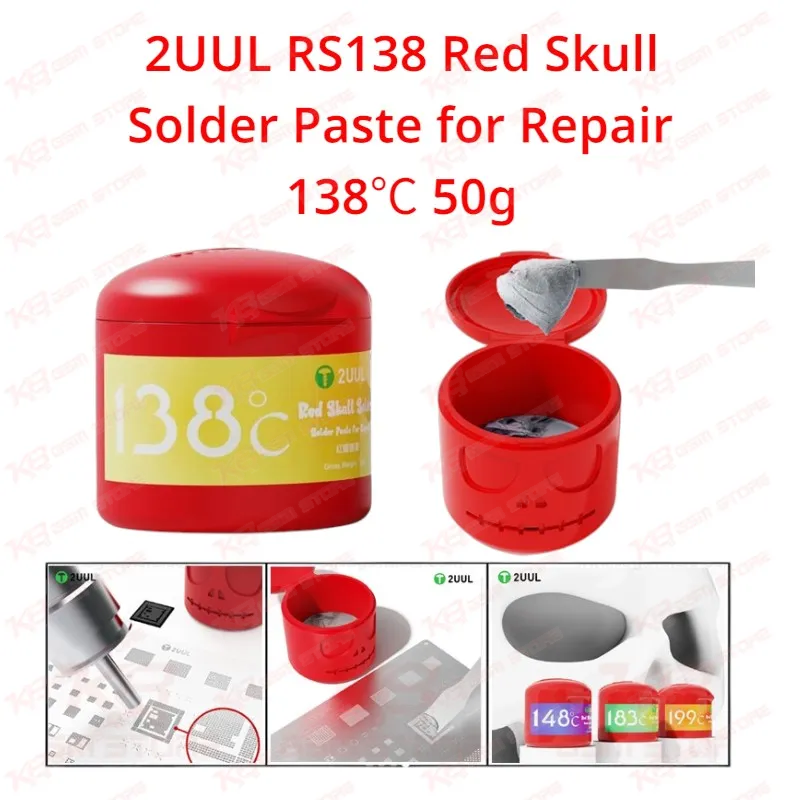
2UUL RS138 Red Skull Solder Paste for Repair 138℃ 50g
2UUL RS138 Red Skull Solder Paste for Repair 138℃ 50g
Regular price
Rs.1,200.00 PKR
Regular price
Sale price
Rs.1,200.00 PKR
Shipping calculated at checkout.
Quantity
Couldn't load pickup availability
The 2UUL RS138 Red Skull Solder Paste gives you a 138°C low-temperature formula built for delicate BGA reballing and motherboard repair work. You get smooth, even flow across pads without overheating nearby components, which matters most on multi-layer boards where one overheated IC can wreck the whole job. Technicians handling dead phone boards, IC change work, or jumper repairs get a paste that solders bright and full, with minimal cold joints or bridging. At 50g per syringe, it covers plenty of repair jobs on your bench before running out, and the low melting point protects sensitive chipsets during reflow.
SKU:MST-SOLDERING-ACCESSORIES-768
⚖️ Weight: 0.1 kg
- Safe & Secure Payment
- Fast Delivery
- WhatsApp Support


Description
FAQ
What is the product name?
The product name is 2UUL RS138 Red Skull Solder Paste 50g.
What is the brand of this product?
The brand of this product is 2UUL.
What is the model of this product?
The model of this product is RS138, part of the Red Skull series.
What is this product used for?
This product is used for low-temperature BGA reballing, IC reattachment, and general motherboard-level soldering repair.
Which devices are compatible with this product?
This product works across Android and iPhone motherboard repair since it's a universal solder paste, not device-specific.
Who should use this product?
This product is suitable for mobile repair technicians, repair shops, service centers, and professional PCB rework users.
Can this paste be used for repeated rework on the same pad?
Yes, since it melts at a low 138°C, technicians can rework the same joint multiple times with reduced risk of the pad lifting off the board.
Is RS138 suitable for power IC and PMIC repair?
Yes, RS138 is specifically positioned for heat-sensitive components like power ICs and PMICs where standard 183°C or 199°C paste carries too much thermal risk.