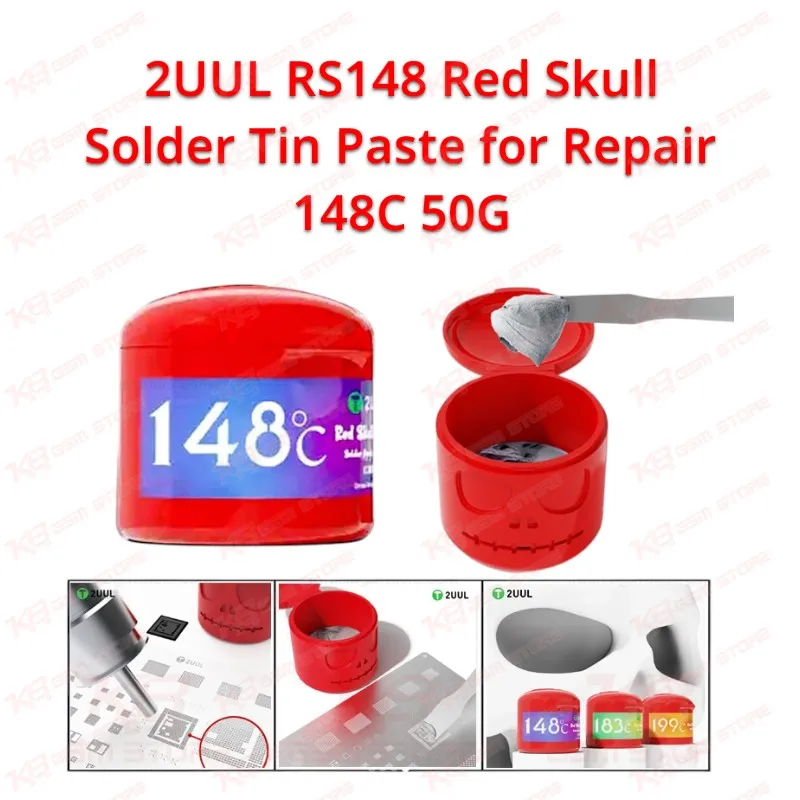
2UUL RS148 Red Skull Solder Paste is a 148°C reflow-temperature solder paste built for the precision demands of mobile phone and PCB-level repair, and it earns its place on the bench because that lower melting point directly protects the sensitive components technicians work around every day. When you're reballing a CPU, resoldering a PMIC, or reworking a small SMD component near a board with heat-sensitive parts already installed, a high-temperature paste raises the risk of warping the board, lifting pads, or cooking nearby ICs that already survived one repair attempt. Running at 148°C instead of the 183°C or higher point used by standard leaded pastes gives you a wider safety margin, so you get cleaner reflow with less thermal stress on the motherboard and the parts sitting next to your work area. The paste combines fine solder particles with an active flux, which means you don't need to apply a separate flux layer before soldering in most cases — it wets the pads on its own and helps solder flow evenly across the joint, which is what produces the bright, full, void-free connections repair shops look for instead of dull, grainy, or cold joints. This matters on jobs like IC change, jumper lagana work on damaged traces, or reballing a chip that's throwing a boot loop issue or hang on logo fault, where a bad joint means the phone comes back to the bench a second time. The 50g quantity comes in a syringe-style dispenser, which lets you apply the paste directly onto pads or stencils in a controlled amount rather than scooping paste with a blade, cutting down on waste and keeping your work area cleaner during long repair sessions. Because the paste is metered rather than poured, you get more consistent results across repeat jobs, which is useful when you're running the same reballing or resoldering process on multiple boards in a day. RS148 fits naturally into standard PCB and CPU rework processes: apply the paste to the pad or stencil, place the component or reballed chip, then reflow using a hot air station or preheater set for the 148°C profile. Because the reflow point sits lower than many general-purpose pastes, you can pair it with a hot air station running at moderate temperature and airflow settings, which reduces the chance of blowing nearby components off the board or overheating the substrate during a delicate rework. Technicians working on dead-after-flash boards, charging issue repairs, or network issue faults traced back to a cracked or lifted IC pad benefit from a paste that reflows cleanly without needing aggressive heat, since aggressive heat is often what caused the original fault in the first place. The paste also holds up well during multi-step repairs where a board needs several rework passes — its flux activity supports repeat reflows on the same pad without leaving excessive residue that would interfere with a later soldering attempt. For a service center or repair shop handling a mix of hardware fault and board-level jobs across different brands and chipset platforms, having a dedicated low-temperature paste like RS148 alongside higher-temperature options (183°C, 199°C) gives you the flexibility to match the paste to the specific repair rather than using one paste for every job. That flexibility, combined with the consistent flow and clean joint quality, is why RS148 has become a standard consumable on many GSM and mobile PCB repair benches working through IC-level and BGA-level rework day to day.