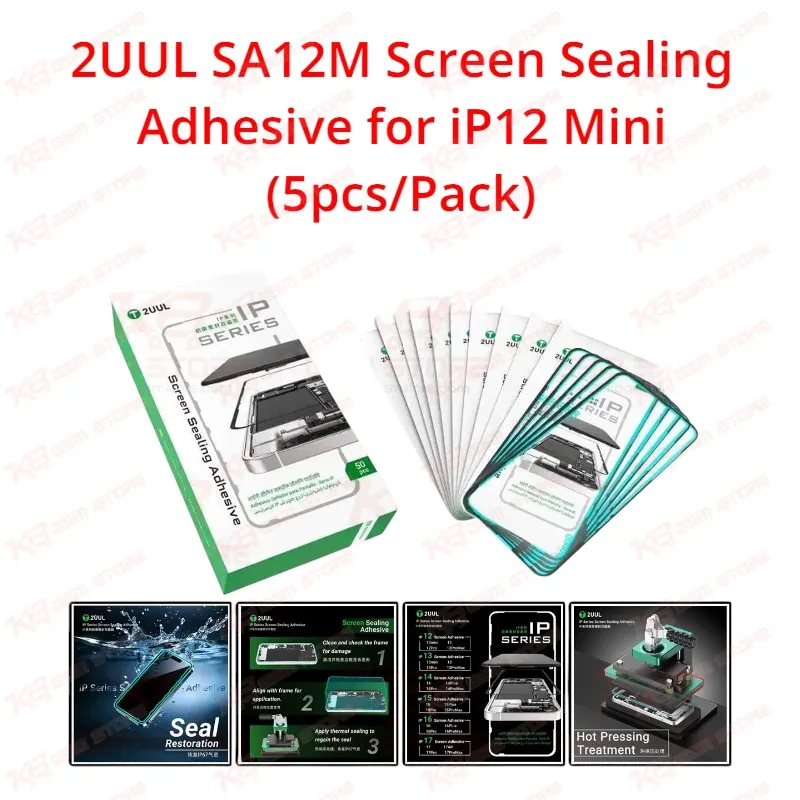
Every time you open an iPhone 12 Mini for a screen replacement, the factory adhesive gets destroyed, and reusing old glue almost always leads to a loose fit or a phone that no longer holds up against dust and moisture. The 2UUL SA12M solves that exact problem on your repair bench. This is a pre-cut double-sided sealing adhesive shaped precisely to match the iPhone 12 Mini frame, so you skip the slow process of cutting generic tape rolls and guessing at alignment. You lift the old residue off the mid-frame, wipe the surface clean, then lay the new adhesive strip directly onto the frame edge before reattaching the display. The pre-cut design means the strip lines up with the screws, speaker cutouts, and camera bracket without extra trimming, which saves real time on a busy bench where you might be running three or four screen jobs in a shift. Once the adhesive sits on the frame and the screen is placed back down, a heat press or hot air station activates the bond, pulling the display assembly tight against the housing and closing every gap around the edge. This step is what actually restores the water resistance the phone had when it left the factory, since a cold-pressed or hand-pressed seal rarely achieves the same even pressure across the whole perimeter. Technicians who skip proper heat-pressing often see customers come back with a "display problem" or moisture damage a few months later, so this part of the workflow is not optional if you want the repair to hold. The double-sided formulation on the SA12M gives strong initial tack so the screen stays in position while you check alignment, then cures into a firm, lasting bond that keeps the display assembly locked to the frame under normal daily handling, drops, and pocket flexing. Because the pack includes 5 pieces, you are covered for a handful of jobs before you need to reorder, which is useful if you run multiple iPhone 12 Mini repairs in a single week rather than just an occasional one-off fix. This adhesive is not a universal roll product, it is molded for this exact model, so you avoid the trial and error of cutting a shape that does not quite match the curve of the frame or leaves gaps near the corners. For a workshop that handles iPhone screen replacements regularly, keeping model-specific adhesive like this in stock next to your screen inventory means you are never stuck reaching for a generic substitute that compromises the seal quality on a customer's device. Pair it with a proper heat press station rather than a heat gun alone, since consistent, even temperature across the frame is what produces a seal that actually resists water rather than one that looks sealed but leaks under pressure. This part fits naturally into your standard screen replacement workflow, right after you have tested the new display and before you close up the housing, making it one of the final steps that determines whether the finished repair feels and performs like factory condition or shows visible gaps at the frame edge.