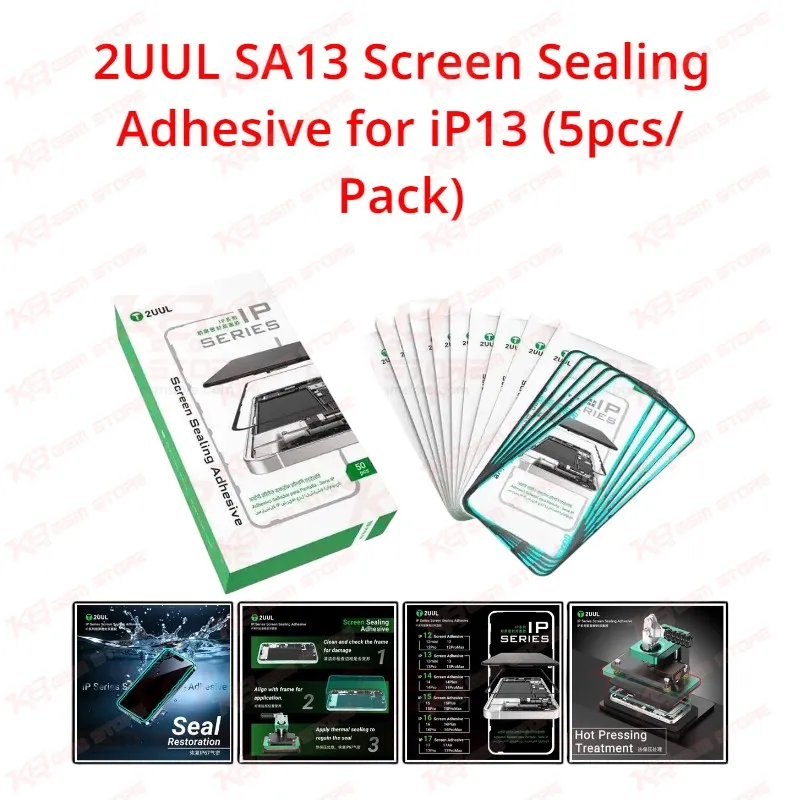
Every time you open an iPhone 13 to replace a cracked screen or fix a display problem, the original factory adhesive gets destroyed in the process, and putting the phone back together without a proper seal leaves the device exposed to dust and moisture. The 2UUL SA13 solves that exact issue by giving you a pre-cut, frame-matched double-sided adhesive strip built to the precise shape of the iPhone 13 chassis, so you're not cutting generic tape by hand and guessing at alignment. The adhesive bonds the LCD frame back to the body with strong, even pressure across the whole perimeter, which is the part of the job that actually determines whether the phone passes a water resistance test afterward. You clean the frame first, removing all residue from the old adhesive and checking for any bent or lifted edges on the chassis, since even a small deformation will stop the new seal from sitting flush. Once the frame is clean and dry, you lay the 2UUL SA13 strip along the edge, matching it to the pre-cut shape so there's no overlap or gap at the corners. After the screen is positioned, running it through a heat press, such as the 2UUL DA07 Mini Hot Press Station or an equivalent unit, activates the adhesive properly and locks the seal in place under consistent heat and pressure, rather than relying on hand pressure alone which almost never gives an even bond. This is the same method used across professional repair benches doing high volumes of iPhone 13 screen work, because it's fast, repeatable, and doesn't depend on how hard the technician happens to press down. Each pack gives you 5 individual adhesive sets, so a single order covers several repair jobs without you needing to reorder for every customer that comes in with a dead phone or cracked display. The strong bond strength also means the screen won't shift or lift over time, which matters on jobs where the customer expects the phone to hold up under daily handling, not just look fine when it leaves the shop. Because it's built specifically for the iPhone 13 body, you're not adapting a universal tape or trimming excess material, which cuts down the time spent on each screen job and reduces the risk of misalignment. For shops that handle a steady stream of iPhone 13 screen replacements, keeping this adhesive stocked means every reassembly gets the same level of sealing quality, instead of varying based on whatever tape happens to be on the bench that day. It's a small part in the overall repair, but it's the one that decides whether the phone stays protected against everyday exposure to dust, sweat, and light moisture after it leaves your shop, so treating it as a standard part of every screen job rather than an optional extra keeps your repair standard consistent and your customers coming back with fewer complaints about the phone getting damp or dusty inside the display.