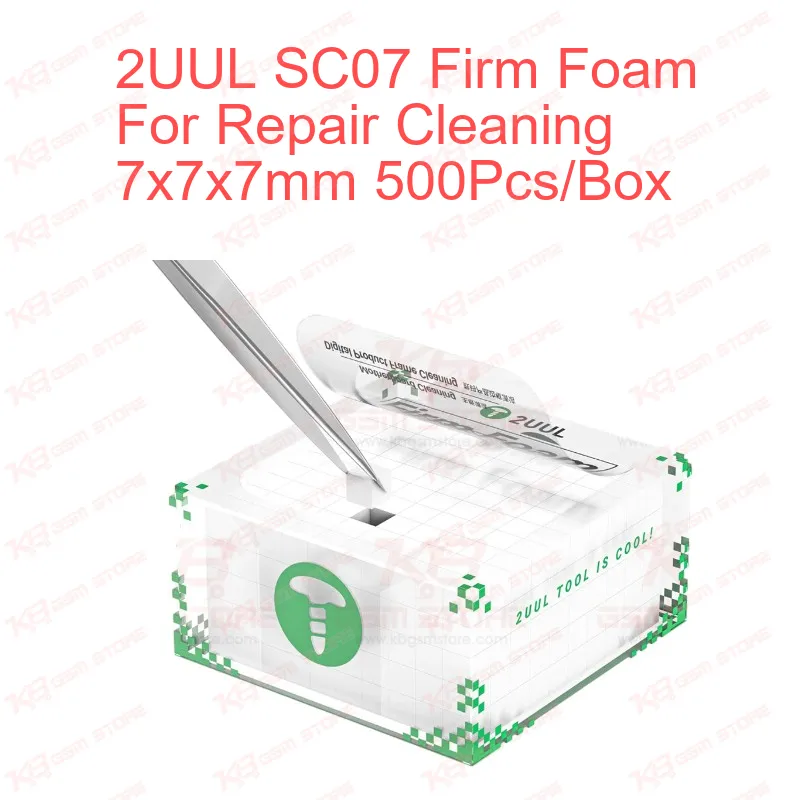
Board cleaning is one of those steps in a repair workflow that gets rushed, and the 2UUL SC07 Firm Foam exists because rushing it usually costs a technician more time later when a dirty pad causes a bad solder joint or an intermittent connection. The foam ships as 500 individual cubes, each cut to a firm 7x7x7mm block, dense enough to hold its shape as you drag it across a pad or IC edge without crumbling or shedding fibers into the board. That density matters more than it sounds: soft sponges compress and smear residue around instead of lifting it, while the SC07 stays rigid enough to scrape oxidation and flux off a solder pad in one or two passes. Technicians working eMMC reballing, CPU reflow, or PMIC replacement jobs reach for a fresh cube after every hot-air cycle, since flux residue left on a pad interferes with the next solder joint and can cause a dead-after-flash situation if a board goes back together dirty. The cube shape gives you more control than a wipe or brush: you can press a corner into a tight gap between connector pins, roll a flat face across a camera module contact ring, or use the full cube to clean a phone frame before reassembly. Because each piece is single-use, cross-contamination between boards stays low, which matters in a shop running dozens of repairs a day where one board's corrosion residue should never end up on the next customer's motherboard. The 500-piece box format keeps a bench stocked for weeks without technicians needing to ration cleaning cubes or reuse a foam piece that has already picked up flux and metal particles. In a typical repair workflow, this foam sits alongside isopropyl alcohol and a brush at the diagnostics and rework stage, used after IC removal to clear old solder and glue residue before placing a new component, and again after reballing to confirm a pad is bright and paste-free under the microscope. It also earns a spot in screen and frame repair, where a phone bezel picking up months of dust and oxidation needs a firm wipe before a new screen assembly seats flush. For shops handling PCB pad oxidation, particularly on older or water-damaged boards, the firm texture cuts through corrosion better than a soft alternative, restoring a clean solder surface without applying excessive pressure that could lift a pad. The foam works equally well across Qualcomm, MediaTek, and Apple-platform boards since the cleaning action is mechanical rather than chip-specific, so a technician switching between an Android motherboard repair and an iPhone logic board job uses the same box without needing a separate cleaning product for each platform. Storage is straightforward: the box keeps cubes dust-free until use, and the firm structure means pieces don't stick together or dry out the way some pre-soaked wipes do. For a repair shop building out a bench SOP, the SC07 fits as a standard consumable line item rather than a specialty tool, priced and packaged for the volume that a busy service center or training institute goes through in normal operation. Pairing it with a rework fluid or flux remover extends its effectiveness on stubborn residue, though the foam alone handles most day-to-day board and frame cleaning without additional chemicals.