


Brand:
2UUL
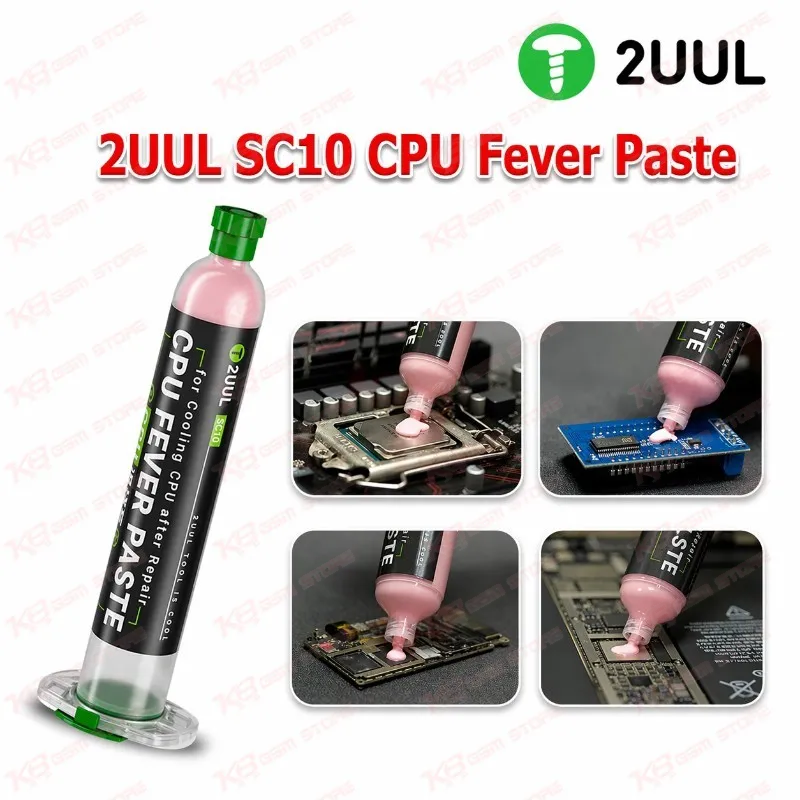
2UUL SC10 CPU Fever Paste 50g – Thermal Conductive Compound for PC, Phone & Tablet Repair
2UUL SC10 CPU Fever Paste 50g – Thermal Conductive Compound for PC, Phone & Tablet Repair
Regular price
Rs.1,500.00 PKR
Regular price
Sale price
Rs.1,500.00 PKR
Shipping calculated at checkout.
Quantity
Couldn't load pickup availability
The 2UUL SC10 CPU Fever Paste is a 50g thermal conductive compound built for technicians who deal with overheating boards, dead phones after long use, and CPU/chipset rework on the bench. You apply a thin layer between the chipset and heatsink or shield to pull heat away fast, which protects the IC during flashing, testing, and normal operation. The pink-colored paste spreads smoothly, resists drying out, and works across phones, tablets, MacBook boards, and PC/gaming setups. For a repair shop running multiple boards through the bench daily, this paste becomes a standard part of the workflow — not just a one-time fix.
SKU:MST-SOLDERING-ACCESSORIES-649
⚖️ Weight: 0.01 kg
- Safe & Secure Payment
- Fast Delivery
- WhatsApp Support


Description
FAQ
What is the product name?
The product name is 2UUL SC10 CPU Fever Paste.
What is the brand of this product?
The brand of this product is 2UUL.
What is the model of this product?
The model of this product is SC10.
What is this product used for?
This product is used to transfer heat away from CPUs and chipsets during repair and normal device operation, protecting the chip from overheating.
Which devices are compatible with this product?
This product is compatible with phone motherboards, tablet boards, MacBook logic boards, and PC/GPU components on a universal basis.
Who should use this product?
This product is suitable for mobile repair technicians, repair shops, service centers, and professional users.
Does this paste work for phone motherboards after IC reballing?
Yes, applying the SC10 paste after reballing or reflow restores proper thermal contact between the chip and its shield or heatsink.
Can this paste help fix a phone that heats up and hangs on logo during use?
Yes, if the hang is caused by heat buildup from dried or missing thermal paste, reapplying the SC10 compound often resolves the issue without needing IC replacement.