


Brand:
2UUL
2UUL SC53 PCB UV Green Curable Solder Mask
2UUL SC53 PCB UV Green Curable Solder Mask
Regular price
Rs.800.00 PKR
Regular price
Sale price
Rs.800.00 PKR
Shipping calculated at checkout.
Quantity
Couldn't load pickup availability
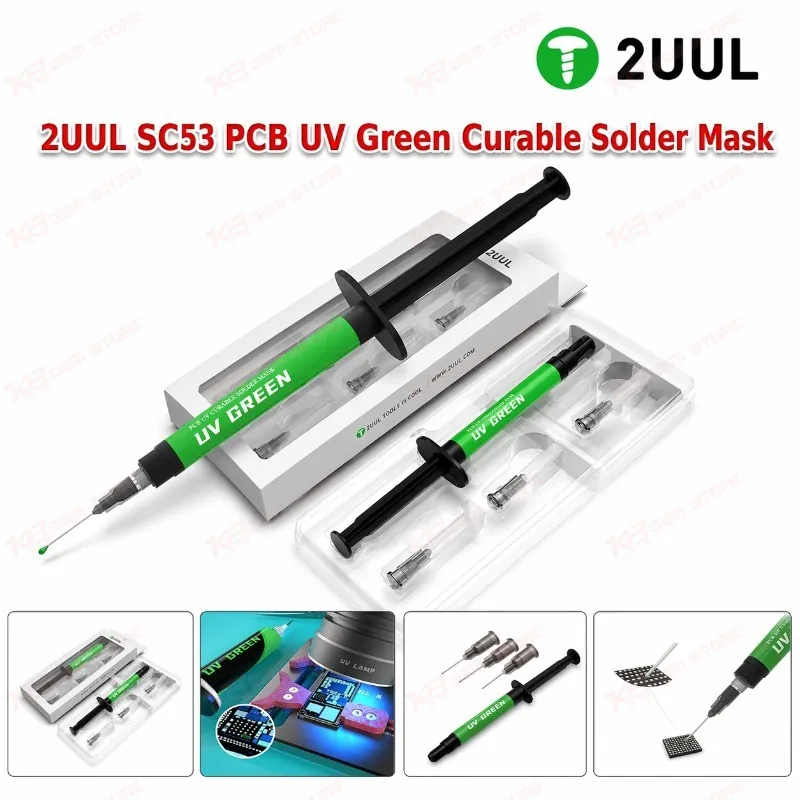
The 2UUL SC53 is a UV-curable green solder mask built for PCB insulation and protection after soldering or rework. Packed in a 10ml anti-UV syringe with three 0.6mm super-thin needles, it lets you apply the paint with pinpoint accuracy on tight motherboard areas without spreading onto surrounding components. Cure it in seconds under a UV lamp or direct sunlight, and get a durable green protective layer that resists corrosion, moisture, and short circuits. Technicians use it daily on your repair bench to mask solder joints, insulate enamelled jumper wire, and seal exposed traces after board-level repair work.
SKU:MST-SOLDERING-ACCESSORIES-496
⚖️ Weight: 0.01 kg
- Safe & Secure Payment
- Fast Delivery
- WhatsApp Support


Description
FAQ
What is the product name?
The product name is 2UUL SC53 PCB UV Green Curable Solder Mask.
What is the brand of this product?
The brand of this product is 2UUL.
What is this product used for?
This product is used to insulate and protect PCB solder joints, traces, and jumper wires after repair or rework.
Who should use this product?
This product is suitable for mobile repair technicians, PCB repair shops, service centers, and professional rework technicians.
What UV wavelength does the 2UUL SC53 cure under?
It cures under UV light in the 365–395nm range, or under direct sunlight, within a few minutes.
Can this solder mask be used to insulate jumper wires after a jumper repair?
Yes, once the jumper wire is soldered in place, applying and curing the SC53 over it protects the connection from shorting against nearby pads or traces.