


Brand:
2UUL
2UUL SC96 Gold Plated FPC Connector Reballing Solder Bar
2UUL SC96 Gold Plated FPC Connector Reballing Solder Bar
Regular price
Rs.900.00 PKR
Regular price
Sale price
Rs.900.00 PKR
Shipping calculated at checkout.
Quantity
Couldn't load pickup availability
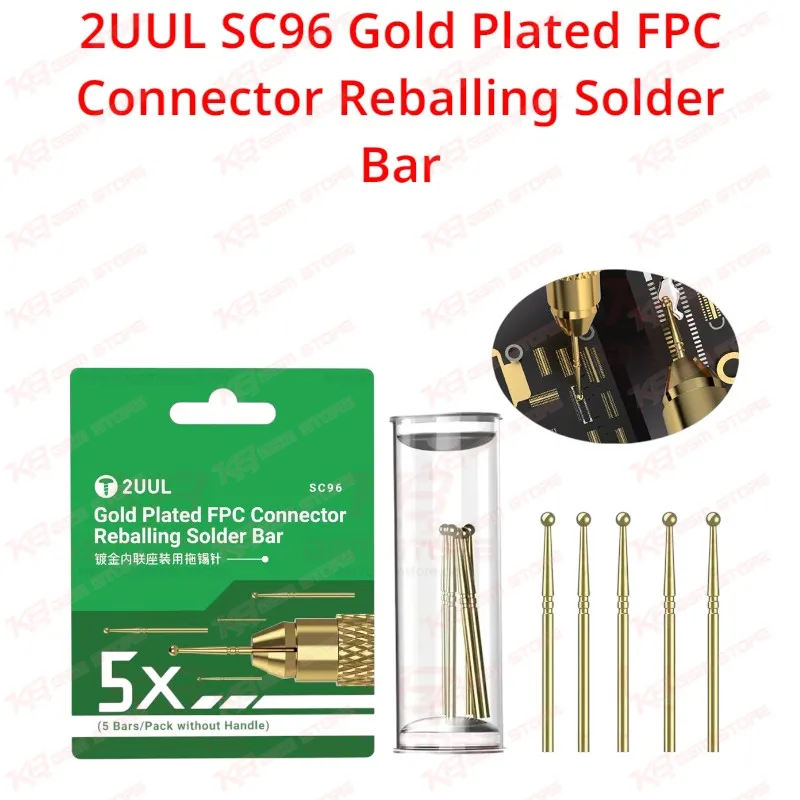
The 2UUL SC96 gives you five gold-plated, pure-copper solder bars built for fast FPC connector reballing on any smartphone or tablet motherboard. The ball head tip picks up and drags tin evenly across connector pads without scratching the board surface, so you get clean, consistent reballing even in tight spaces around charging ports, display connectors, and camera FPC pins. This version ships without a handle, letting you fit it into your own preferred grip or holder. It's a straightforward, no-frills consumable every microsoldering bench should keep stocked for board-level repair work.
SKU:MST-SOLDERING-ACCESSORIES-799
⚖️ Weight: 0.03 kg
- Safe & Secure Payment
- Fast Delivery
- WhatsApp Support


Description
FAQ
What is the product name?
The product name is 2UUL SC96 Gold Plated FPC Connector Reballing Solder Bar.
What is the brand of this product?
The brand of this product is 2UUL.
What is the model of this product?
The model of this product is SC96.
What is this product used for?
This product is used for FPC connector reballing and tin dragging during board-level microsoldering repair.
Which devices are compatible with this product?
This product is universal and works on any motherboard with FPC connectors, across Apple, Samsung, Oppo, Vivo, Xiaomi, and other brands.
Who should use this product?
This product is suitable for mobile repair technicians, repair shops, service centers, and professional microsoldering technicians.
Does this SC96 pack include a handle for the solder bars?
No, this version ships without a handle, so you can fit the bars directly into your own preferred grip or holder.
How many solder bars are included in one SC96 pack?
One SC96 pack includes 5 gold-plated solder bars.