


Brand:
2UUL
2UUL * UTOOLBE BH07 Screen Stand Mini
2UUL * UTOOLBE BH07 Screen Stand Mini
Regular price
Rs.800.00 PKR
Regular price
Sale price
Rs.800.00 PKR
Shipping calculated at checkout.
Quantity
Couldn't load pickup availability
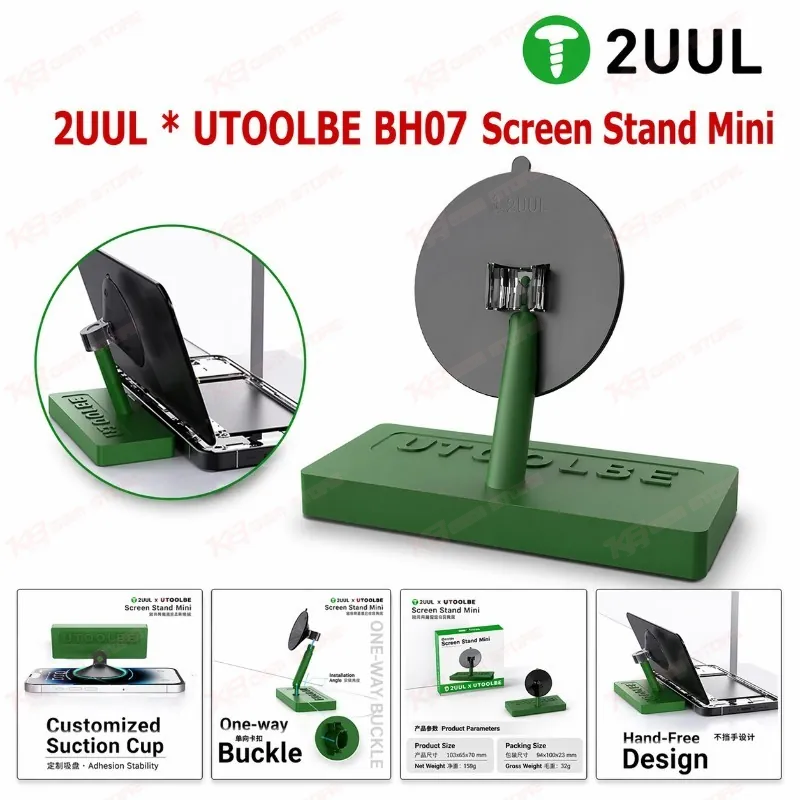
The 2UUL UTOOLBE BH07 Mini Screen Stand gives you a hands-free way to hold a lifted phone screen safely to the side while you work on the battery, motherboard, or back cover. The customized suction cup grips the display with a one-way buckle for stable adsorption, so the screen stays put without you holding it. Its compact 80x35x70mm plastic body sits independently next to the phone, freeing both hands for board-level work. At just 15g, it fits easily into any repair kit or tool tray. A simple, low-cost fixture that speeds up disassembly and protects fragile screens during everyday repair bench tasks.
SKU:MST-SOLDERING-ACCESSORIES-503
⚖️ Weight: 0.01 kg
- Safe & Secure Payment
- Fast Delivery
- WhatsApp Support


Description
FAQ
What is the product name?
The product name is the 2UUL UTOOLBE BH07 Mini Screen Stand.
What is the brand of this product?
The brand of this product is 2UUL, produced under the UTOOLBE line.
What is the model of this product?
The model of this product is BH07.
What is this product used for?
This product holds a lifted phone screen to the side using a suction cup, keeping it safe and out of the way during battery, motherboard, or back cover repair.
Which devices are compatible with this product?
This stand is universal and works with standard smartphone LCD screens rather than being limited to a specific phone model.
Who should use this product?
This product is suitable for mobile repair technicians, repair shops, service centers, and professional users.
Does the suction cup work on both curved and flat screen edges?
The BH07 suction cup is designed for standard flat LCD panel edges typical of most smartphone displays, giving stable adsorption during side-mounting.
Can this stand hold the screen steady without any hand support during long repairs?
Yes, the hands-free design lets the stand hold the screen independently once the suction cup locks on, so no continuous hand pressure is needed throughout the repair.