Skip to product information
1 of 5

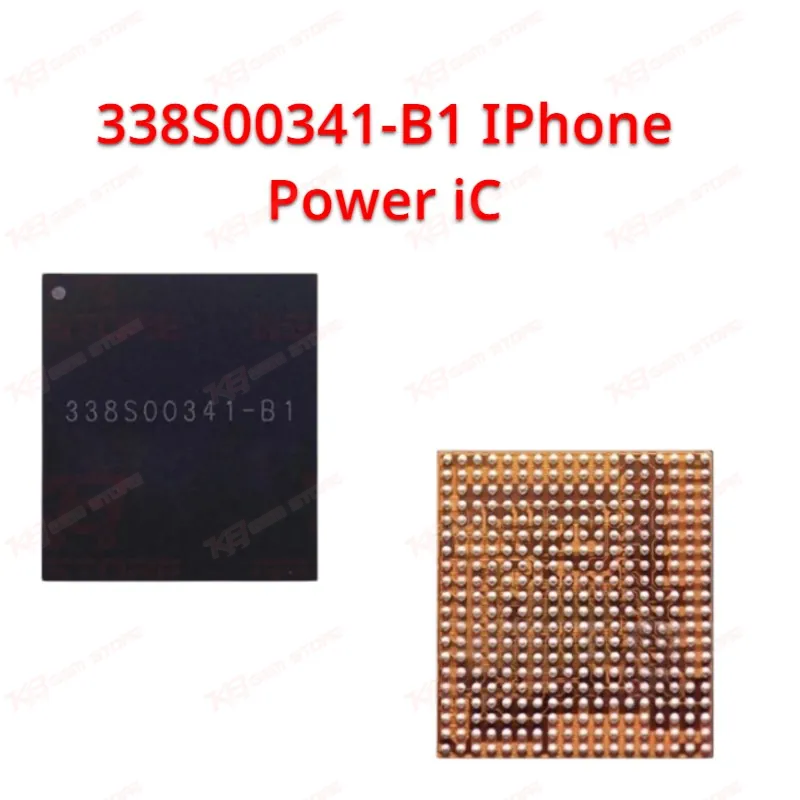
338S00341-B1 IPhone Power iC

338S00341-B1 IPhone Power iC

Regular price Rs.450.00 PKR
Regular price Sale price Rs.450.00 PKR
Sale Sold out
Shipping calculated at checkout.
Quantity

The 338S00341-B1, known on the board as U2700, handles main power distribution for iPhone 8, 8 Plus, and X logic boards. When a phone stays dead after a liquid damage repair, shows no charging response, or hangs on the Apple logo despite a clean software flash, this PMIC is often the root cause. Replacing it restores stable voltage rails across the board so the CPU, baseband, and display circuits get consistent power. This chip suits technicians doing board-level repair, not casual users — it needs hot air reballing or a BGA rework station and reflow skill. Stock this IC alongside your ISP and boot-related repair tools for dead-phone cases.

⚖️ Weight: 0.01 kg

SKU:MST-IC-344

  • Safe & Secure Payment
  • Fast Delivery
  • WhatsApp Support
View full details

Description

Every iPhone board depends on one chip to keep every other chip alive, and on the 8, 8 Plus, and X that chip is the 338S00341-B1, labeled U2700 on the schematic. It sits in the main power tree, converting battery voltage into the multiple regulated rails that feed the CPU, RAM, baseband, and display driver. When a technician gets a phone that's completely dead after water damage, or one that draws current on the bench power supply but never boots, U2700 is one of the first suspects you check.You'll recognize the pattern before you even get the multimeter out. A board that pulls short-circuit current on the power supply, a phone that shows the charging screen but never progresses past it, or a unit that passed a hardware check yet stays dead after flash — these are classic signs of a failing main PMIC. Corrosion from a liquid spill tends to attack this chip directly since it sits close to the charging path, so if the phone came in with a "fell in water" history, inspect U2700 first before chasing smaller ICs.Working on this chip means committing to proper rework technique. You need a preheating station to bring the board up to temperature evenly, a hot air gun set to the right airflow and heat profile for this package size, and flux that won't leave residue that causes a repeat short. Rushing the reflow — too much heat too fast, or lifting the chip before the solder is fully liquid — cracks the pads underneath and turns a straightforward IC swap into a board-level nightmare. Clean the pads thoroughly after removing the old chip, check for lifted pads under a microscope, and only then place the new 338S00341-B1 with fresh solder balls or paste.After reflow, don't skip continuity and short testing before you power the board back up. A quick check across the main power rails against ground catches a bad joint before it damages other components on first boot. If the board still short-circuits after you've placed the new chip, look for a secondary fault — cracked capacitor, another shorted IC downstream — rather than assuming the PMIC itself failed again.This part fits directly into your dead-phone and no-power repair workflow. Pair it with your hot air station, BGA reballing kit, and PCB holder for a full main power replacement job, and keep a digital multimeter on hand for the before-and-after diagnostics. For technicians running a busy repair bench, stocking this IC means you're not waiting on a supplier the next time a liquid-damaged 8 or X comes in dead on arrival.Fit and function depend entirely on correct installation. A misaligned chip, insufficient preheat, or contaminated pads will produce an unstable board even with a genuine part, so this component is meant for technicians already comfortable with BGA-level rework — not a plug-and-play accessory.

Key Features

  • Genuine board-position replacement for the U2700 main PMIC
  • Restores multiple regulated power rails from a single chip swap
  • Fits directly into existing iPhone 8 / 8 Plus / X board layout without rerouting
  • Suited for liquid-damage boards with corrosion near the charging path
  • Works with standard hot air reballing and BGA rework equipment
  • Resolves short-circuit-on-power-supply symptoms tied to main power failure
  • Compatible with standard flux and solder paste used in mobile board repair
  • Supports full board recovery when paired with proper reflow technique

Specifications

Brand Entity OEM/Aftermarket Mobile Repair Part
Product Entity 338S00341-B1 Power Management IC (U2700)
Technology Entity BGA Power Management Integrated Circuit
Compatible Device Entities iPhone 8, iPhone 8 Plus, iPhone X
Repair Process Entity Board-Level PMIC Reballing and Reflow Repair
Industry Entity Mobile Phone PCB Repair and Rework Industry

Compatible Devices

Apple iPhone 8, iPhone 8 Plus, iPhone X (verified board-level compatibility via part designator U2700)

Common Repair Uses

Dead phone after liquid damage, no-power or no-boot boards, main power rail failure, short-circuit on bench power supply, hang on Apple logo after ruling out software causes, board-level PMIC reballing and replacement

FAQ

What is the product name?
The product name is the 338S00341-B1 Power Management IC, known as U2700.
What is the brand of this product?
This is an OEM/aftermarket component, not tied to a single named brand.
What is the model of this product?
The model is 338S00341-B1, designated U2700 on the board.
What is this product used for?
It's used to replace a failed main power IC on dead or no-power iPhone boards.
Which devices are compatible with this product?
It's compatible with iPhone 8, iPhone 8 Plus, and iPhone X.
Who should use this product?
Mobile repair technicians and repair shops doing board-level rework, not casual DIY users without BGA experience.
Does this IC need a full board reflow or just a spot replacement?
It requires spot removal and reballing at the U2700 position using hot air rework, not a full board reflow.
Why does this chip fail more often on liquid-damaged boards?
Its position near the charging path exposes it directly to corrosion from spilled liquid, making it a common failure point on water-damaged units.

Ask any Query