


338S00411 IPHONE IC
338S00411 IPHONE IC
Regular price
Rs.300.00 PKR
Regular price
Sale price
Rs.300.00 PKR
Shipping calculated at checkout.
Quantity
Couldn't load pickup availability
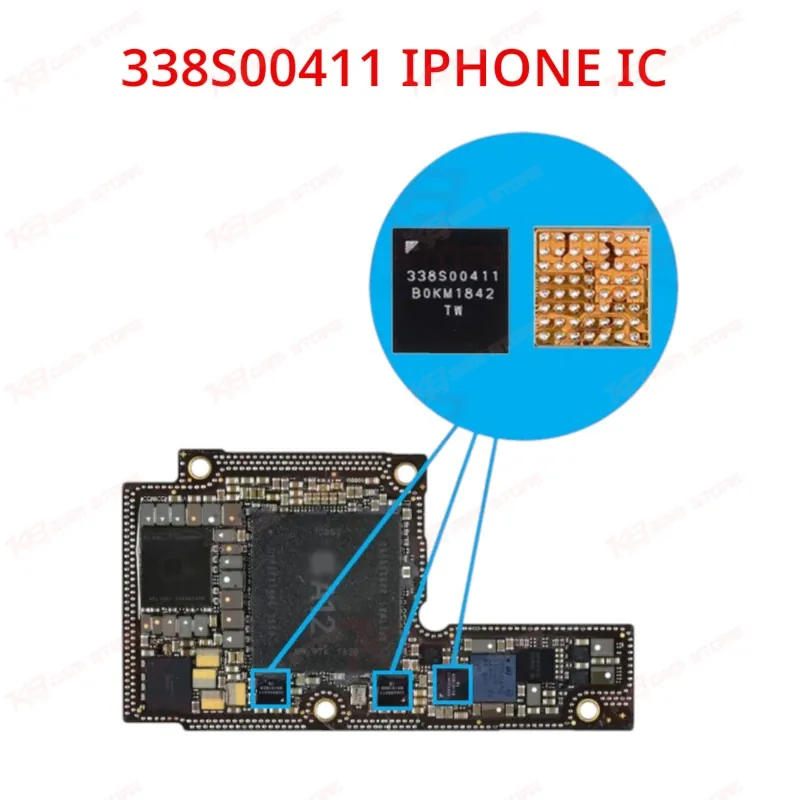
The 338S00411 small audio IC controls the speaker and microphone circuit on iPhone XS, XS Max, XR, 11, 11 Pro, 11 Pro Max, 12, 12 Mini, 12 Pro, and 12 Pro Max boards. Technicians use this chip when a phone shows no sound on calls, dead speaker, weak mic pickup, or no sound after a drop or liquid damage. This IC sits at board position U4700 on XS/XR boards and U4902/U5002/U5102 on 11 and 12 series boards. A hot air station and BGA soldering skill are needed for reballing and placement. It is a common bench part for any repair shop handling iPhone audio faults.
⚖️ Weight: 0.01 kg
SKU:MST-IC-222
- Safe & Secure Payment
- Fast Delivery
- WhatsApp Support


Description
FAQ
What is the product name?
The product name is the 338S00411 iPhone Small Audio IC.
What is the brand of this product?
This is an OEM-grade replacement chip used on Apple iPhone logic boards.
What is the model of this product?
The model marking is 338S00411, also found labeled as 338S00494 on some board revisions.
What is this product used for?
This chip controls the speaker and microphone audio circuit and gets replaced when a phone has no sound, no mic, or audio faults traced to this IC.
Which devices are compatible with this product?
It is compatible with iPhone XS, XS Max, XR, 11, 11 Pro, 11 Pro Max, 12, 12 Mini, 12 Pro, and 12 Pro Max.
Who should use this product?
This chip is suitable for mobile repair technicians, repair shops, service centers, and board-level repair professionals.
Does this IC need a full BGA reballing process for replacement?
Yes, this chip needs to be removed with hot air, the pad cleaned, and the replacement reballed and reflowed under a microscope — it is not a simple drop-in part.
Is the U4700 position on an XS/XR board the same chip as the U4902/U5002/U5102 position on 11 and 12 series boards?
Yes, all these positions carry the same 338S00411 audio control function; only the board position label changes across models.