


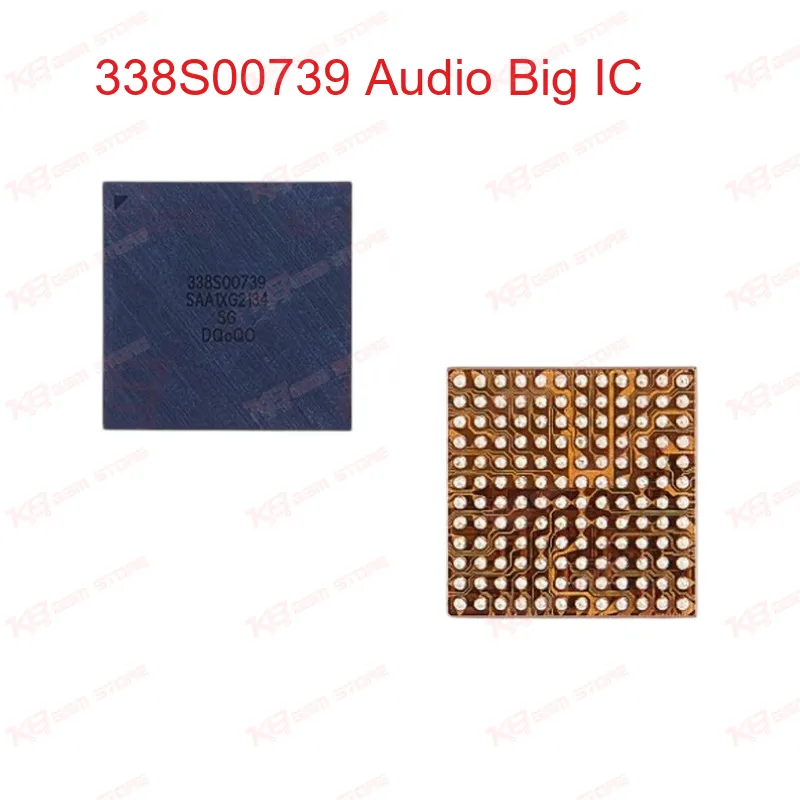
338S00739 Audio Big IC
338S00739 Audio Big IC
Regular price
Rs.650.00 PKR
Regular price
Sale price
Rs.650.00 PKR
Shipping calculated at checkout.
Quantity
Couldn't load pickup availability
The 338S00739 Audio Big IC is the audio codec chip fitted at the U7800 position on iPhone 13 and 14 series motherboards. Technicians reach for this IC when a phone shows static output, distorted sound, or a dead speaker/mic path that isn't tied to the connector or flex. It handles the audio signal processing between the logic board and the phone's audio hardware. This IC is a common replacement in board-level repair for audio faults that survive a software restore, making it a staple part for any workshop handling iPhone 13/14 motherboard work.
⚖️ Weight: 0.01 kg
SKU:MST-IC-378
- Safe & Secure Payment
- Fast Delivery
- WhatsApp Support


Description
FAQ
What is the product name?
The product name is Audio Big IC 338S00739.
What is the brand of this product?
The brand of this product is Apple (OEM).
What is the model of this product?
The model of this product is 338S00739.
What is this product used for?
This product is used to repair audio codec faults such as static, distorted call sound, or dead speaker/mic issues on the motherboard.
Which devices are compatible with this product?
This product is compatible with iPhone 13, 13 Mini, 13 Pro, 13 Pro Max, 14, 14 Plus, 14 Pro, and 14 Pro Max.
Who should use this product?
This product is suitable for mobile repair technicians, board-level repair shops, service centers, and professional technicians handling logic board rework.
Where is the 338S00739 IC located on the iPhone motherboard?
It sits at the U7800 position on iPhone 13/14 series logic boards.
Can a bad 338S00739 IC cause distorted audio during calls even after a software restore?
Yes — if audio issues persist after a full restore and the flex/connectors test fine, a damaged audio codec IC at U7800 is a common cause and usually requires reballing or replacement.