


45 Degree 9mm Nozzle For Quick 861DW Hot Air Gun
45 Degree 9mm Nozzle For Quick 861DW Hot Air Gun
Regular price
Rs.1.00 PKR
Regular price
Sale price
Rs.1.00 PKR
Shipping calculated at checkout.
Quantity
Couldn't load pickup availability
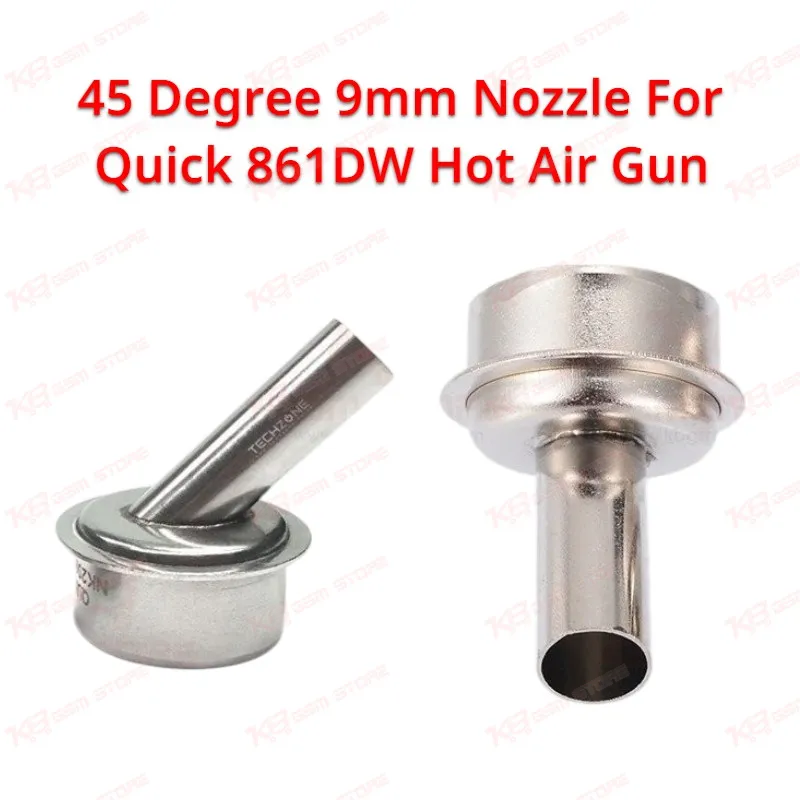
This 45 degree 9mm nozzle fits the Quick 861DW hot air gun and solves a problem every microscope-based technician faces: aiming hot air straight onto a chip while working at an angle. The curved sleeve slides over the original air gun mouth and redirects airflow sideways, so you get direct heat on CPU-side components without tilting the handpiece. Technicians use this nozzle for BGA rework, CPU reballing, and PCB chip removal on mobile motherboards. Built from heat-resisting steel, it handles repeated high-temperature cycles without warping. If it feels loose during use, pinch the middle section with pliers to tighten the fit.
SKU:MST-REWORK-STATION-4
⚖️ Weight: 0.01 kg
- Safe & Secure Payment
- Fast Delivery
- WhatsApp Support


Description
FAQ
What is the product name?
The product name is 45 Degree 9mm Nozzle for Quick 861DW Hot Air Gun.
What is the brand of this product?
The brand of this product is Quick.
What is the model of this product?
This nozzle fits the Quick 861DW and Quick TR1300A hot air stations.
What is this product used for?
It directs hot air at a 45 degree angle onto CPU-side chips for BGA rework, IC removal, and PCB repair under a microscope.
Which devices are compatible with this product?
It is compatible with Quick 861DW and Quick TR1300A hot air rework stations only.
Who should use this product?
Mobile repair technicians, PCB repair shops, and service centers running CPU-level board repair.
Does this nozzle fit other hot air stations besides Quick 861DW?
No, this nozzle sleeve is sized specifically for the Quick 861DW air gun mouth and won't seat correctly on other brands.
What should I do if the nozzle feels loose during use?
Use pliers to gently pinch the middle part of the sleeve to tighten its grip on the air gun mouth.