


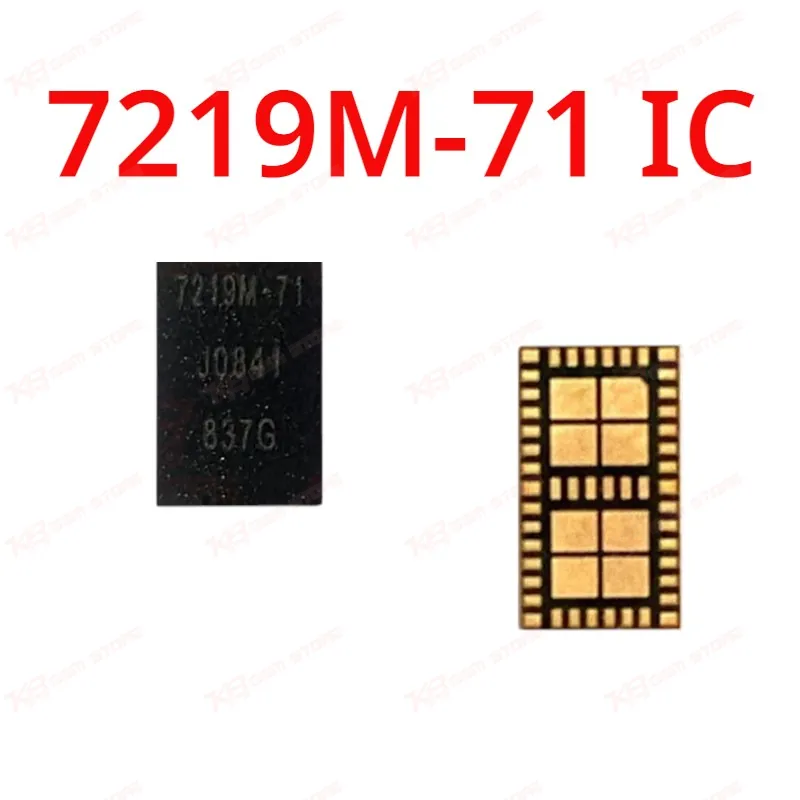
7219M-71 IC
7219M-71 IC
Regular price
Rs.250.00 PKR
Regular price
Sale price
Rs.250.00 PKR
Shipping calculated at checkout.
Quantity
Couldn't load pickup availability
The 7219M-71 is a BGA-package RF power amplifier IC used to restore signal transmission and network performance on mobile phone motherboards. Technicians reach for this chip when a device shows weak network, dropped calls, or no signal after a board-level fault, since the PA IC directly drives the antenna's transmit power. It's a compatible/aftermarket replacement part, built for board-level rework on repair benches handling network and signal issues.
⚖️ Weight: 0.01 kg
SKU:MST-IC-209
- Safe & Secure Payment
- Fast Delivery
- WhatsApp Support


Description
FAQ
What is the product name?
The product name is 7219M-71 RF Power Amplifier IC.
What is this product used for?
This IC is used to replace a faulty RF power amplifier on a mobile phone board, fixing weak signal, no network, and dropped call issues.
Which devices are compatible with this product?
This IC is compatible across multiple mid-range Android chipset platforms, commonly seen on Realme, Oppo, Vivo, and Xiaomi boards using this variant.
Who should use this product?
This product is suitable for mobile repair technicians, repair shops, service centers, and professional users.
Is this chip beginner-friendly to install?
No, it requires BGA rework skills and a hot air station with accurate temperature control for reflow.
Does replacing this IC fix all network issues?
No, it only fixes faults traced to the PA IC itself — antenna switch or transceiver faults need separate diagnosis.