


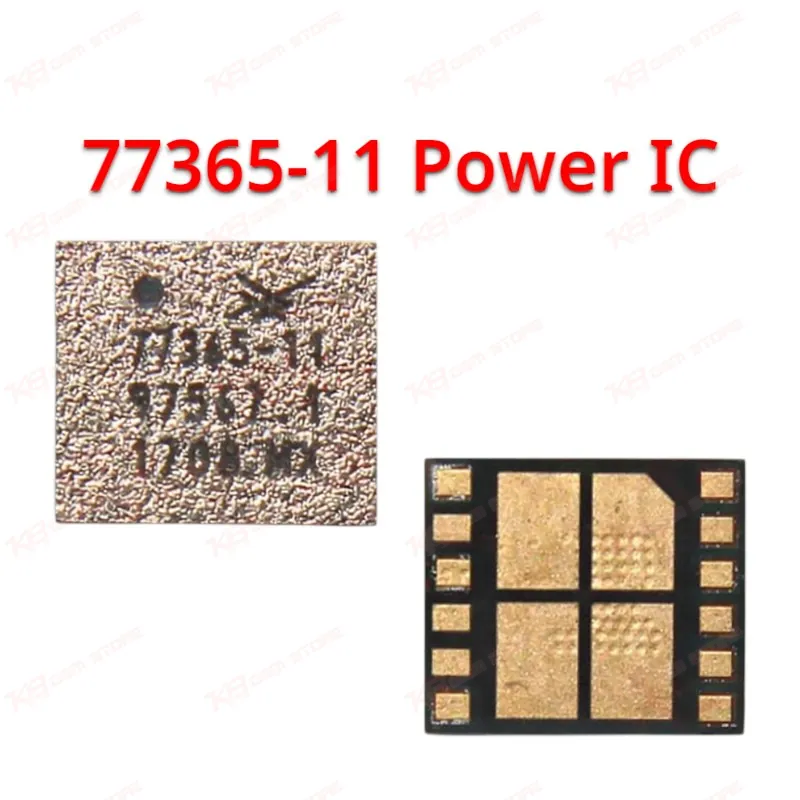
77365-11 Power IC
77365-11 Power IC
Regular price
Rs.300.00 PKR
Regular price
Sale price
Rs.300.00 PKR
Shipping calculated at checkout.
Quantity
Couldn't load pickup availability
The SKY77365-11 is a Skyworks quad-band power amplifier module built for 2G GSM850/900, DCS1800, and PCS1900 handsets. You get GMSK and EDGE modulation support with Class 12 GPRS multi-slot operation in one compact module. Technicians reach for this IC when a phone shows weak network, no signal, or complete network drop after a board-level fault. The module integrates both PA blocks plus a MIPI-programmable control block, giving your repair bench a direct, board-accurate replacement for failed RF front-end sections on older quad-band devices.
⚖️ Weight: 0.01 kg
SKU:MST-IC-267
- Safe & Secure Payment
- Fast Delivery
- WhatsApp Support


Description
FAQ
What is the product name?
The product name is the Skyworks SKY77365-11 Quad-Band GSM/EDGE Power Amplifier IC.
What is the brand of this product?
The brand of this product is Skyworks Solutions.
What is the model of this product?
The model of this product is SKY77365-11.
What is this product used for?
This product handles RF power amplification for network issues on quad-band 2G GSM/GPRS/EDGE handsets, covering symptoms like no signal, weak network, and intermittent network drop.
Which devices are compatible with this product?
This product is compatible with quad-band GSM850/900, DCS1800, and PCS1900 handsets, commonly used in Samsung-era feature phones from the same RF platform generation.
Who should use this product?
This product suits mobile repair technicians, GSM repair shops, service centers, and professional network-fault repair workflows.
Does this IC support both GMSK and EDGE modulation?
Yes, the SKY77365-11 supports fixed-gain GMSK and linear EDGE modulation in the same module, along with Class 12 GPRS multi-slot operation.
Is this power amplifier module still in active production?
No, Skyworks lists this part as a legacy component no longer recommended for new designs — current stock serves as a board-accurate replacement for existing quad-band GSM devices already in the field.