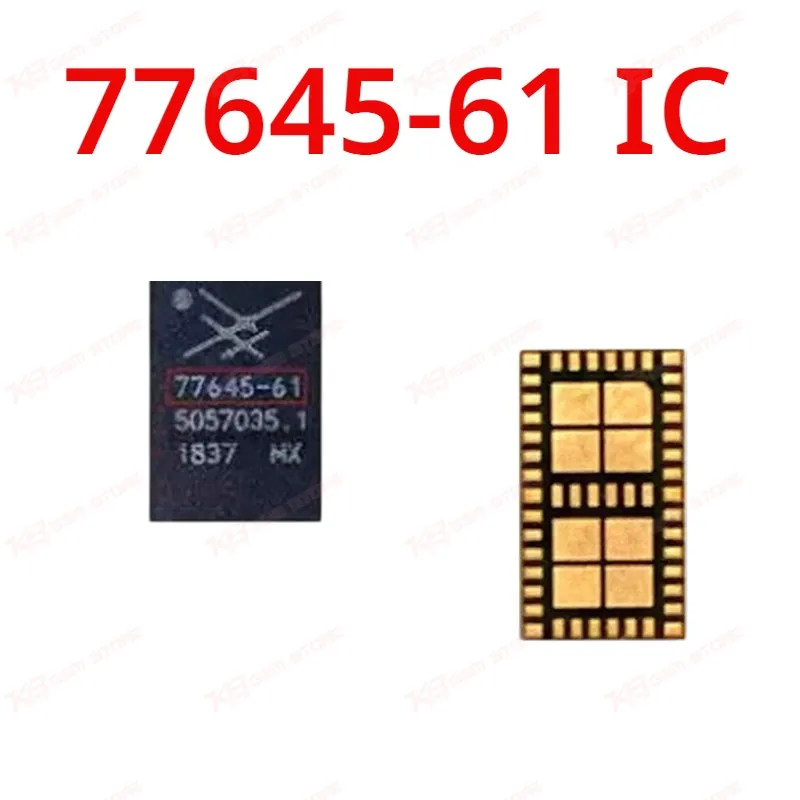
When a phone loses network entirely, drops calls constantly, or shows a permanently weak signal bar despite a working SIM and antenna, the fault often sits on the RF power amplifier stage — not the baseband IC. The SKY77645-61 is exactly that component: a Skyworks SkyLiTE™ multimode multiband power amplifier module (MMMB PAM) built to boost outgoing RF signal across CDMA, WCDMA, TD-SCDMA, and LTE bands before it reaches the antenna.This is a genuine Skyworks part, not a generic clone. Skyworks lists the SKY77645-61 as part of its SkyLiTE PA family, which shares its core architecture with the SKY77645-11 and SKY77645-21 variants documented in the manufacturer's public datasheets. The module is fully MIPI-programmable, meaning it takes its bias and mode control commands directly over the Mobile Industry Processor Interface rather than through fixed analog control lines. That's what lets a single PA module cover multiple bands and modes on the same board instead of needing separate amplifiers for each.On your bench, this is the IC to reach for when you've already ruled out antenna damage, loose flex connectors, and software-level network settings, and the fault still traces back to the RF section of the board. Common symptoms include "no network" after liquid damage, intermittent signal drop under load, weak signal that never reaches full bars even in strong coverage areas, and network issues that survive a fresh flash. If diagnostics on the RF output confirm the amplifier stage is dead or damaged, IC change karna at this location resolves the fault far more reliably than repeated software resets.The part carries Skyworks' status as officially discontinued, which is normal for RF PA modules tied to older chipset platforms — it doesn't affect functional performance on boards designed around it, but it does mean stock comes from existing inventory rather than fresh production runs. Buy in the quantity you need for current repair jobs rather than long-term stockpiling.Handle this component with standard BGA-level precautions. Use a hot air rework station with accurate temperature control, apply flux before removal and reflow, and inspect the board pads under a microscope before reballing or placing the replacement IC. Because the module sits in the RF signal path, a poor solder joint here shows up as an intermittent fault rather than a dead-on-arrival symptom — take the extra time to verify a clean, void-free joint rather than rushing the reflow.This IC ships as a standalone component for board-level repair work. It does not include a stencil, flux, or reballing kit — pair it with a matching stencil and quality flux paste for a clean reflow. For workshops running high volumes of network and signal repairs, keeping this part alongside a hot air station, microscope, and multimeter on the same bench covers the full diagnostic-to-repair workflow without stopping mid-job to source tools.