


874B Audio IC For Phone Repair
874B Audio IC For Phone Repair
Regular price
Rs.350.00 PKR
Regular price
Sale price
Rs.350.00 PKR
Shipping calculated at checkout.
Quantity
Couldn't load pickup availability
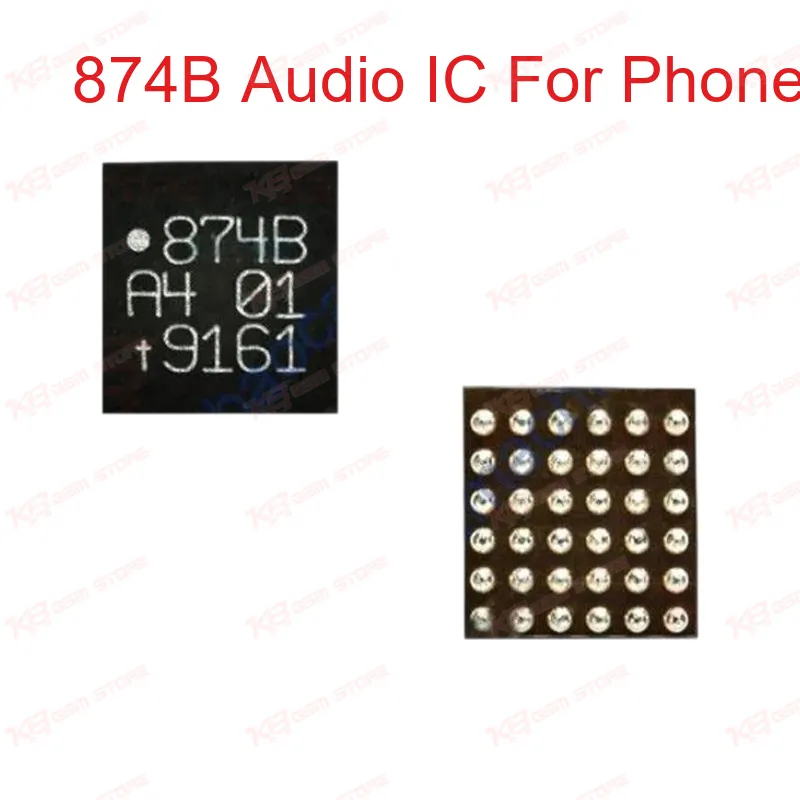
The 874B, known in the industry as TFA9874, is an NXP audio amplifier IC responsible for sound output on a wide range of Xiaomi, Redmi, Poco, Oppo, Realme, OnePlus, and Honor boards. Technicians reach for this IC when a phone has no sound, distorted speaker output, or mic failure after liquid damage or a bad drop. It comes in a BGA package, so it needs a hot air rework station and proper reballing for a clean board-level repair. Stock this chip on your bench for fast turnaround on common audio complaints instead of sending boards out for external repair.
⚖️ Weight: 0.01 kg
SKU:MST-IC-366
- Safe & Secure Payment
- Fast Delivery
- WhatsApp Support


Description
FAQ
What is the product name?
The product name is the 874B Audio IC, also known as TFA9874.
What is the brand of this product?
The brand of this product is NXP.
What is the model of this product?
The model of this product is 874B (TFA9874).
What is this product used for?
This product is used to repair no-sound, low-volume, and mic failure issues on supported phone boards.
Which devices are compatible with this product?
This product is compatible with Xiaomi, Redmi, Poco, Oppo, Realme, OnePlus, and select Honor/Huawei models listed above.
Who should use this product?
This product is suitable for mobile repair technicians, repair shops, service centers, and professional GSM technicians.
Does the 874B IC control both speaker and mic circuits?
On most supported boards, it drives the speaker and earpiece output and is also involved in the microphone signal path, so a fault here can affect both.
Is the 874B IC hand-solderable or does it require hot air rework?
It comes in a BGA package, so it requires a hot air rework station and proper reballing rather than iron soldering.