Skip to product information
1 of 4

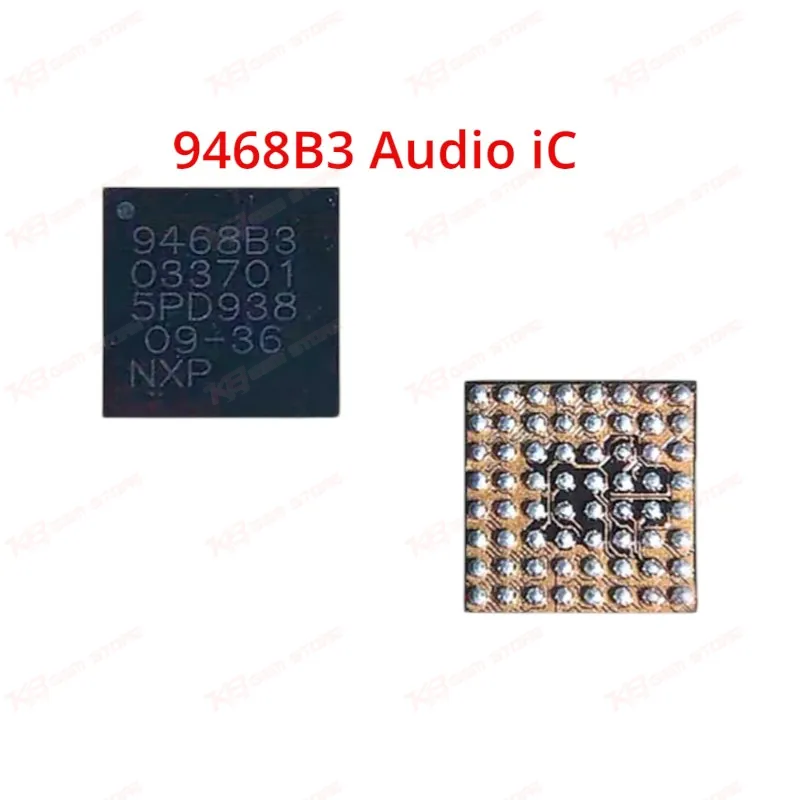
9468B3 Audio iC

9468B3 Audio iC

Regular price Rs.1.00 PKR
Regular price Sale price Rs.1.00 PKR
Sale Sold out
Shipping calculated at checkout.
Quantity

The 9468B3 Audio IC is the audio codec chip built into the Samsung Galaxy S20, S20+, S20 Ultra, and Xiaomi Mi 9/10 series motherboards. It handles mic input, speaker output, and headphone jack signal processing on the board. Technicians reach for this IC when a phone shows no sound, mic not working, one-side speaker fault, or dead audio after a drop or liquid exposure. BGA-packaged and reflow-ready, it drops straight onto your existing reballing and rework process. Every piece ships tested before it leaves the workshop bench, so you get a reliable IC change without a second round of diagnosis on your table.

⚖️ Weight: 0.01 kg

SKU:MST-IC-172

  • Safe & Secure Payment
  • Fast Delivery
  • WhatsApp Support
View full details

Description

Audio faults are one of the most common tickets a GSM technician sees on the Samsung Galaxy S20 series and Xiaomi Mi 9/10 boards, and more often than not the root cause traces back to a single point on the motherboard: the 9468B3 audio IC. This chip sits between the CPU's audio interface and the phone's mic, earpiece speaker, loud speaker, and headphone jack circuits. When a customer walks in with "no sound on calls," "mic not working," "one side speaker gone," or "hang on logo after audio issue," your multimeter checks usually lead straight back to this IC before you even open the schematic.The 9468B3 works as the audio codec — it converts digital audio signals from the processor into analog output for the speakers and converts analog mic input back into digital data the CPU can process. A short, dry joint, or IC-level damage here shows up as garbled audio, one-channel dropout, mic sensitivity issues, or complete silence on both incoming and outgoing audio paths. On Samsung Galaxy S20, S20+, and S20 Ultra boards, and on Xiaomi Mi 9 and Mi 10 series boards, this IC occupies a fixed position near the audio connector traces, which makes it a predictable and repeatable repair point once you've handled a few units.For your repair bench, this means a dead-audio complaint doesn't always require a full board swap or a costly out-of-warranty replacement quote for the customer. In most cases, an IC change resolves the fault completely, provided the surrounding traces and the audio power rail test clean. Before reaching for the hot air station, check for physical damage around the IC footprint, run a diode-mode check across the audio lines, and rule out a software-level audio driver glitch — some "no sound" complaints trace back to a corrupted audio codec configuration rather than hardware failure, and a software flash resolves those without any soldering.Where the hardware fault is confirmed, this becomes a straightforward reballing and rework job for a technician who already runs BGA IC changes regularly. Preheat the board evenly on your hot air rework station, lift the faulty 9468B3 cleanly without lifting pads, clean the footprint, reball the replacement IC to match the original ball pattern, and reflow with correct temperature control to avoid tombstoning or bridging. A microscope check after reflow confirms ball alignment before you power the board back on. This IC is manufactured for direct drop-in use on the original footprint, so you're not modifying pads or adjusting the schematic — it fits the same position the original chip occupied.This audio IC sits within the board-level repair workflow alongside your power IC, CPU, and charging IC work — the same soldering skillset, the same hot air station, and the same reballing stencils you already use for those jobs apply here. Stocking this IC on your bench means fewer callbacks for audio complaints on S20-series and Mi 9/10 boards, and a faster turnaround for one of the most frequently reported faults technicians see in the service center. Each unit is tested before packing, cutting down the chance of a second failed unit on the same job and protecting your workshop's repair time on a ticket that customers usually want back the same day.

Key Features

Direct drop-in fit for the original 9468B3 footprint on S20-series and Mi 9/10 boards

Handles mic input, speaker output, and headphone jack signal processing

Each unit tested before dispatch to reduce repeat IC failures on the bench

Fits standard hot air rework and reballing workflow, no pad modification needed

Resolves common no-sound, dead-mic, and one-side-speaker complaints

Compact BGA package built for precision reflow soldering

Suitable for board-level repair alongside power IC and CPU rework jobs

Stable audio signal path once reballed and reflowed correctly

Specifications

Brand Entity Compatible replacement IC (aftermarket)
Product Entity 9468B3 Audio Codec IC
Technology Entity Audio codec / BGA IC rework
Compatible Device Entities Samsung Galaxy S20 series, Xiaomi Mi 9/10 series
Repair Process Entity IC reballing and hot air reflow soldering
Industry Entity Mobile phone motherboard repair

Compatible Devices

Samsung Galaxy S20, Samsung Galaxy S20+, Samsung Galaxy S20 Ultra, Xiaomi Mi 9 series, Xiaomi Mi 10 series (device-specific, verified)

Common Repair Uses

Audio IC replacement for no sound/dead audio, mic not working, one-side speaker fault, headphone jack signal issues, and audio failure following liquid damage or board-level short

FAQ

What is the product name?
The product name is 9468B3 Audio IC.
What is the model of this product?
The model of this product is 9468B3.
What is this product used for?
This product is used to repair no-sound, dead-mic, and one-side speaker faults by replacing the audio codec IC on the motherboard.
Which devices are compatible with this product?
This IC is compatible with Samsung Galaxy S20, S20+, S20 Ultra, and Xiaomi Mi 9/10 series boards.
Who should use this product?
This product is suitable for mobile repair technicians, repair shops, service centers, and professional GSM technicians.
Does replacing this IC always fix a "no sound" complaint?
Not always — a hardware fault at this IC resolves most no-sound and dead-mic issues, but a corrupted audio codec software setting can cause the same symptom, so it's worth ruling out with a software flash first before reballing.
What soldering setup do I need to change this IC?
A hot air rework station with even preheat control, a reballing stencil matching the 9468B3 ball pattern, and a microscope for post-reflow ball alignment checks.

Ask any Query