


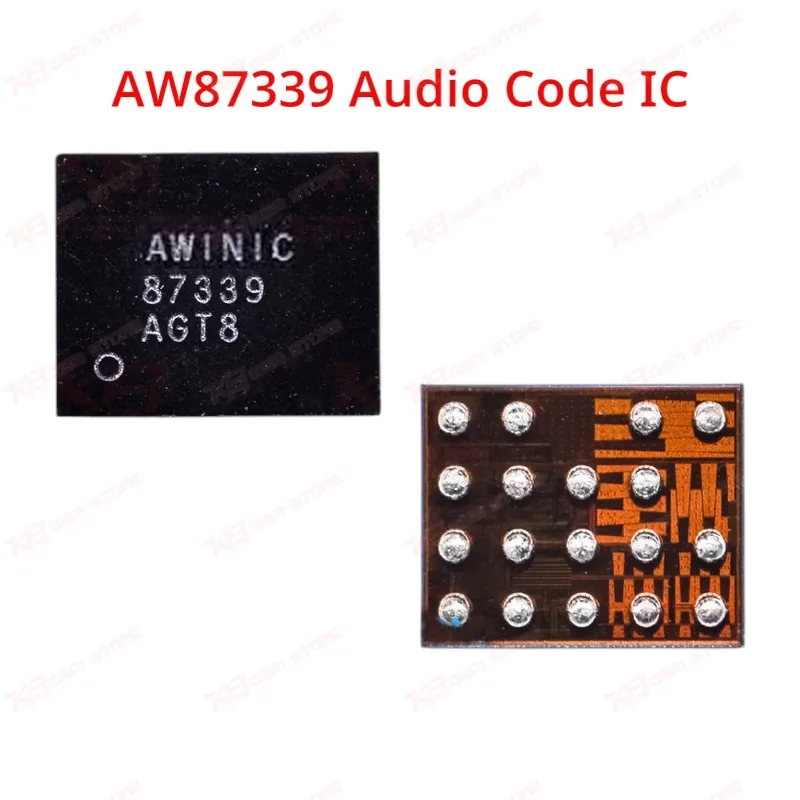
AW87339 Audio Code IC
AW87339 Audio Code IC
Regular price
Rs.280.00 PKR
Regular price
Sale price
Rs.280.00 PKR
Shipping calculated at checkout.
Quantity
Couldn't load pickup availability
The AW87339 is an AWINIC Smart K audio amplifier IC used to restore ear speaker, loudspeaker, and call audio function on Oppo A5, Vivo Y93, Vivo NEX, and Vivo X23 boards. Built with Triple-Level Triple-Rate AGC and a high-efficiency charge pump, this audio driver IC handles dead speaker, no sound on call, low volume, and distorted audio faults common on these boards. Hardware compatible with the AW87319CSR family, it's a direct board-level replacement for technicians doing BGA-level audio IC change on Oppo and Vivo repair jobs across Lahore, Karachi, and Islamabad workshops.
⚖️ Weight: 0.01 kg
SKU:MST-IC-206
- Safe & Secure Payment
- Fast Delivery
- WhatsApp Support


Description
FAQ
What is the product name?
The product name is AW87339 Audio Code IC.
What is the brand of this product?
The brand of this product is AWINIC.
What is the model of this product?
The model of this product is AW87339.
What is this product used for?
This product is used to repair loudspeaker, ear speaker, and call audio faults by replacing the faulty audio amplifier IC on the board.
Which devices are compatible with this product?
This product is compatible with Oppo A5, Vivo Y93, Vivo NEX, and Vivo X23.
Who should use this product?
This product is suitable for mobile repair technicians, repair shops, service centers, and professional GSM technicians.
Is the AW87339 compatible with the AW87319CSR?
Yes, AWINIC confirms the AW87339 is hardware compatible with the AW87319CSR, so it can be used on boards designed for that chip where layout allows.
What symptoms indicate the AW87339 needs replacement?
Complete loss of speaker sound, distorted or crackling call audio, and low volume output that persists after ruling out the physical speaker are the main symptoms pointing to this IC.