


Creation Space ZPJ1802A Rechargeable Electric Screwdriver
Creation Space ZPJ1802A Rechargeable Electric Screwdriver
Regular price
Rs.1.00 PKR
Regular price
Sale price
Rs.1.00 PKR
Shipping calculated at checkout.
Quantity
Couldn't load pickup availability
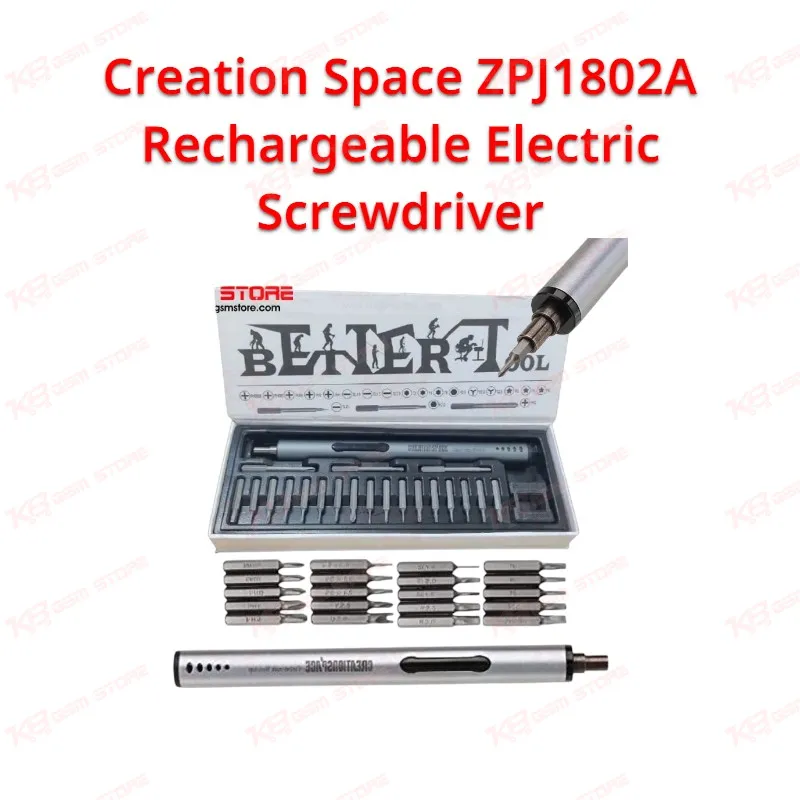
The Creation Space ZPJ1802A is a compact, rechargeable electric screwdriver built for mobile repair technicians who need speed and precision on the bench. With a slim S2 aluminum alloy pen-shape body, a 3.7V lithium battery, and a no-load speed of 150rpm, it handles small screws on phones, tablets, and other devices without the wrist fatigue of a manual driver. The built-in LED light keeps dark corners of a board visible, while the magnetic work plate and bit set keep tiny screws from disappearing mid-repair. USB charging gets it ready in about 45 minutes, making it a practical daily driver for a busy repair counter.
SKU:MST-SOLDERING-ACCESSORIES-77
⚖️ Weight: 0.19 kg
- Safe & Secure Payment
- Fast Delivery
- WhatsApp Support


Description
FAQ
What is the product name?
The product name is Creation Space ZPJ1802A Rechargeable Electric Screwdriver.
What is the brand of this product?
The brand of this product is Creation Space.
What is the model of this product?
The model of this product is ZPJ1802A.
What is this product used for?
This product is used for removing and tightening small precision screws on phones, tablets, and similar electronics during repair work.
Which devices are compatible with this product?
This product works with smartphones, tablets, and small electronics using standard precision screw types, since it is a universal bit-driven tool rather than device-locked.
Who should use this product?
This product is suitable for mobile repair technicians, repair shops, service centers, and professional users.
Does this screwdriver support both automatic and manual operation?
Yes, the ZPJ1802A offers automatic mode for fast screw driving and manual mode for delicate or precise screws.
How long does the ZPJ1802A take to fully charge and how long does the charge last?
It charges in about 45 minutes via USB and its 260mAh battery is designed for repeated short repair sessions throughout a workday.