


CS47L93 Audio IC
CS47L93 Audio IC
Regular price
Rs.300.00 PKR
Regular price
Sale price
Rs.300.00 PKR
Shipping calculated at checkout.
Quantity
Couldn't load pickup availability
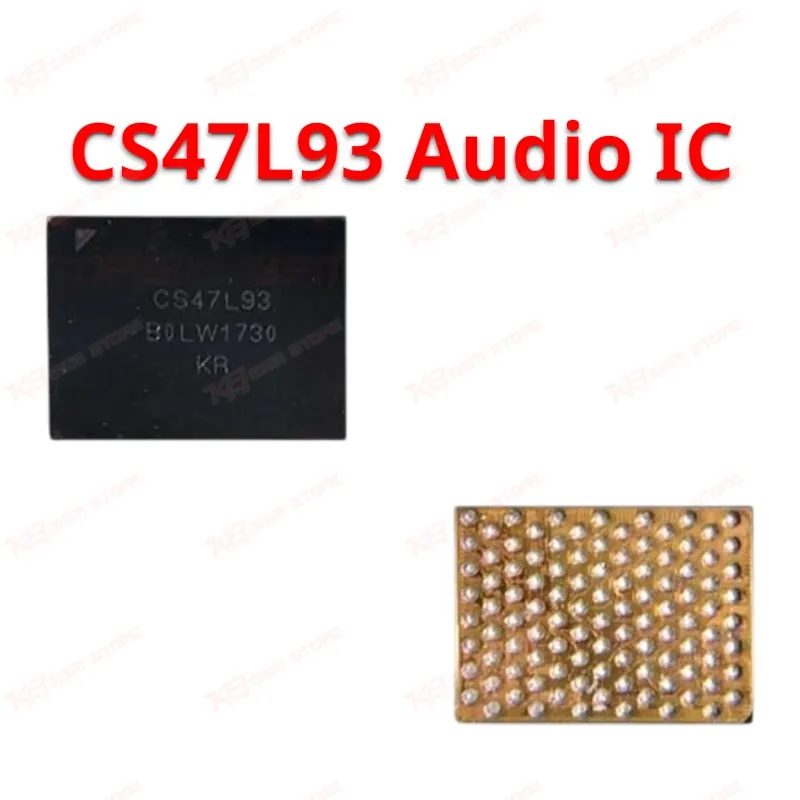
The CS47L93 is a Cirrus Logic Hi-Fi audio smart codec IC used on Exynos-variant Samsung Galaxy S9, S9+, and S10 series mainboards. This WLCSP chip manages the phone's core audio codec functions and works alongside the CS35L40 amplifier ICs on the board. Technicians use this IC for board-level repair of dead audio, no sound, speaker fault, and microphone fault issues on Exynos Galaxy boards. Supplied as a genuine Cirrus Logic part suited for reballing and direct replacement on affected motherboards. A reliable stock item for Samsung Exynos audio-line board repair at any GSM repair workshop in Lahore, Karachi, or Islamabad.
⚖️ Weight: 0.01 kg
SKU:MST-IC-144
- Safe & Secure Payment
- Fast Delivery
- WhatsApp Support


Description
FAQ
What is the product name?
The product name is Cirrus Logic CS47L93 Audio Codec IC.
What is the brand of this product?
The brand of this product is Cirrus Logic.
What is the model of this product?
The model of this product is CS47L93.
What is this product used for?
This product is used for board-level replacement of the audio codec on affected Samsung Galaxy Exynos boards to resolve dead audio, speaker, or microphone faults.
Which devices are compatible with this product?
This product is compatible with Samsung Galaxy S9, Galaxy S9+, and Galaxy S10 series Exynos variant mainboards.
Who should use this product?
This product is suitable for mobile repair technicians, repair shops, service centers, and professional users experienced in WLCSP-level board reballing.
Does this IC work on Snapdragon variant Galaxy boards?
No, the CS47L93 is specific to Exynos variant boards; Snapdragon variants use a different audio codec IC.
Is a stencil included with this IC?
No, this listing is for the bare CS47L93 IC only — a matched WLCSP reballing stencil must be sourced separately.