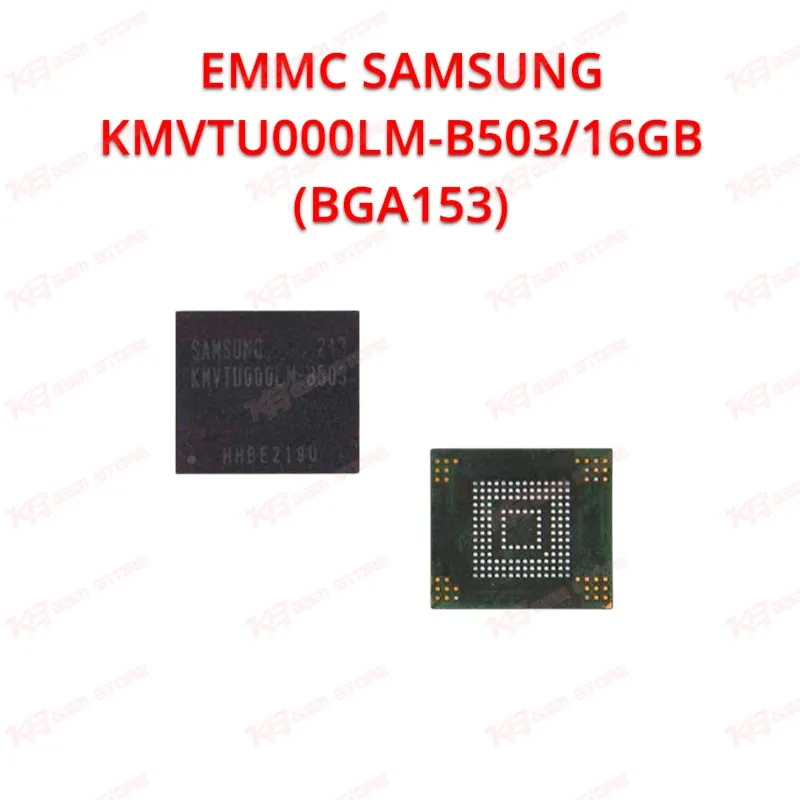
When a Galaxy S III or Galaxy Note II comes into your workshop dead after flash, hanging on the Samsung logo, or completely unresponsive to any flashing tool, the eMMC IC is usually the first component you suspect, and the SAMSUNG KMVTU000LM-B503 is the exact original part these two boards use. This chip is a 16GB eMMC storage module housed in a BGA153 package, and it stores everything the phone needs to boot: the bootloader, the Android operating system, the baseband firmware, and all user data. A worn-out or physically damaged chip typically shows up as boot loop issue, hang on logo, or a device that flashing software simply refuses to detect, and in most of these cases desoldering the faulty IC and replacing it with a genuine KMVTU000LM-B503 brings the board back to life. Because it carries the identical part number and pinout as the factory-installed chip, you avoid the guesswork and compatibility risks that come with using a substitute eMMC from a different generation or vendor. Working with this IC follows the same BGA repair workflow you already use on your bench. Start by preheating the board and removing the damaged chip with a hot air rework station set to a controlled temperature profile, then clean the pads thoroughly before reballing. This IC uses the BGA153 ball pattern, so a matching BGA153 stencil is required to reball it accurately; skipping this step or using the wrong stencil is one of the most common reasons technicians report dead after flash issues even after installing a supposedly good chip. Once reballed and reflowed onto the board with fresh solder paste, most UFI box, Z3X, Miracle Box, or similar EMMC-compatible programmers can read, write, or clone the chip directly, which is especially useful when you're transferring data from a customer's original faulty chip onto a fresh replacement instead of doing a clean flash. This IC change karna approach is standard practice for shops handling Samsung board-level repair, since replacing the eMMC directly is often faster and more reliable than repeated software flashing attempts on a chip that's already failing electrically. Keep in mind this is a board-level, BGA soldering job that demands a stable microscope setup, precise temperature control, and clean PCB pads, so it's intended for technicians already comfortable with reballing and reflow work rather than beginners doing their first IC swap. Stock corruption, NAND wear from years of use, or physical damage from a previous failed repair attempt are the usual reasons a Galaxy S III or Note II needs this chip replaced, and having a genuine KMVTU000LM-B503 on your bench means you're not left waiting on a part when a customer's dead phone is sitting on your desk. Pair it with a matching BGA153 stencil, a reliable hot air station, and a compatible EMMC programmer, and you have everything needed to complete a full eMMC replacement on these two Samsung models without guessing at compatibility or hunting for a substitute part mid-repair.