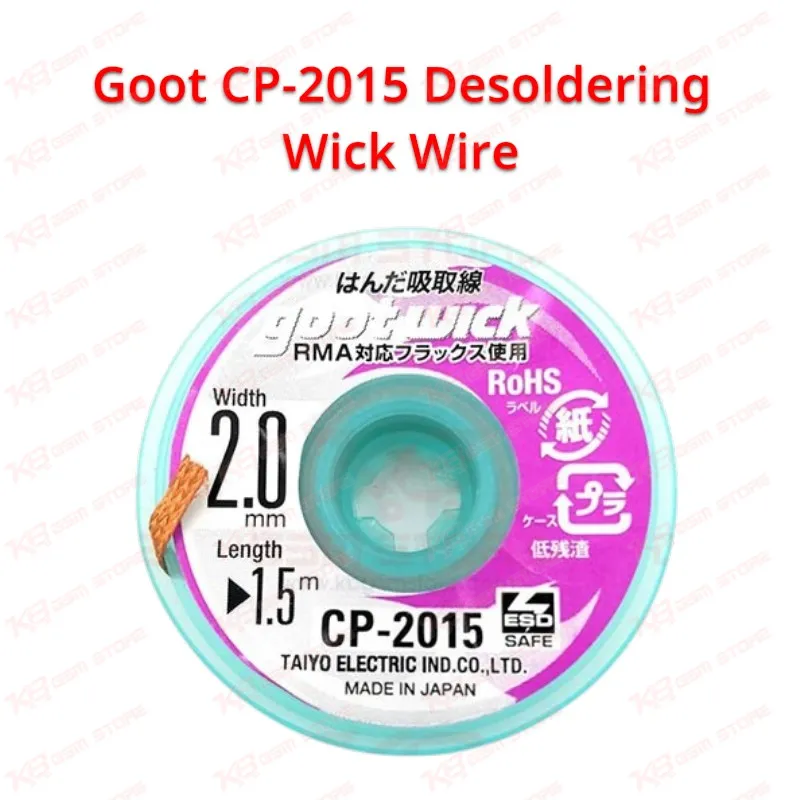
When you're pulling a burnt IC off a dead phone board or cleaning up a pad before reballing, the wick you use decides whether the board survives the job or not. The Goot CP-2015 solves that problem with a 2.0mm flat copper braid that pulls solder fast without holding excess heat against the PCB. This matters most on multilayer boards where one extra second under the iron can lift a pad or crack a trace, and it's exactly the kind of small detail that separates a clean repair from a board you have to jumper afterward. The braid is woven from pure oxygen-free copper, so it conducts heat evenly across its width instead of creating hot spots that scorch the solder mask around a component. Every strand is saturated with non-chlorine RMA flux, which means you're not fighting sticky residue or corrosive leftovers once the job is done — you wipe the board clean and move on to the next step, whether that's reflow, IC replacement, or continuity testing. For technicians dealing with a board that's dead after flash or hanging on the logo, clean pads are often the first checkpoint before you even start diagnosing the fault further. This wick handles lead-free solder without a fight, which is common now on newer motherboards where lead-free alloys need higher heat and better thermal response than older wicks can manage. The Goot CP-2015 is built specifically for that heat load, absorbing solder quickly enough that you don't need to hold the iron down longer than necessary. Anti-static construction adds another layer of protection, since a static discharge at the wrong moment on a sensitive board can turn a simple solder job into a component-level fault you didn't ask for. That's a real risk when you're working on charging ICs, power management chips, or any board sitting close to ESD-sensitive parts, and it's one less thing to worry about with this wick in hand. Packaging is practical too — the wick comes sealed in a silica gel zipper bag, which stops moisture and oxygen from degrading the copper or weakening the flux before you get around to using the full length. On a repair bench where wicks sit in a drawer between jobs, that kind of protection actually extends the shelf life instead of leaving you with a dried-out, less effective braid a few months in. Use it for IC change work, connector pad cleanup, charging port desoldering, board tinning before a jumper repair, or general flux and solder cleanup on a board you're prepping for diagnosis. It's equally useful whether you're working motherboard-level repairs on Android boards, iPhone logic boards, or laptop PCBs — the 2.0mm width sits in the sweet spot for most component pads without being too wide for tight spacing. RoHS2 compliance means the materials meet standard restrictions on hazardous substances, which matters if you're running a shop that supplies to institutional or export clients. At 1.5m length, one wick covers a good number of jobs before you need a replacement, and the flat braid design means less wasted wick per pull compared to round or loosely woven alternatives. For a Pakistani repair shop running high job volume — dead phone boards, charging issues, hardware fault diagnosis — a wick that performs consistently without damaging pads directly affects how many boards you save versus scrap. The CP-2015 gives you that consistency job after job.