


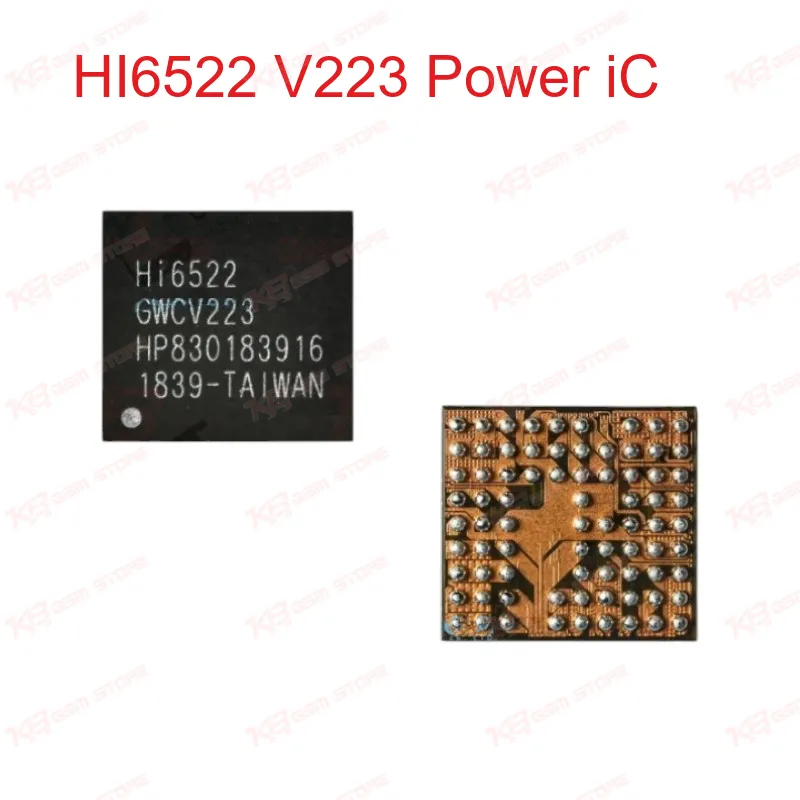
HI6522 V223 Power iC
HI6522 V223 Power iC
Regular price
Rs.250.00 PKR
Regular price
Sale price
Rs.250.00 PKR
Shipping calculated at checkout.
Quantity
Couldn't load pickup availability
The HI6522 V223 Power IC is a power management chip built for Huawei and Honor smartphones that show charging issues, dead phone symptoms, or no power at all. Technicians use this IC to restore proper power distribution on boards where the original chip has burned out or stopped regulating voltage correctly. You get a direct replacement part that matches the original footprint, so reballing and soldering stay straightforward on your repair bench. This chip fits several Huawei and Honor board generations, making it a practical stock item for any GSM shop handling Huawei power faults.
⚖️ Weight: 0.01 kg
SKU:MST-IC-368
- Safe & Secure Payment
- Fast Delivery
- WhatsApp Support


Description
FAQ
What is the product name?
The product name is HI6522 V223 Power IC.
What is the brand of this product?
This is a Huawei-compatible power management IC.
What is the model of this product?
The model is HI6522 V223.
What is this product used for?
It's used to repair charging issues and dead phone faults caused by a failed power management chip.
Which devices are compatible with this product?
It's compatible with several Huawei Mate, P, and Honor series boards — check your exact model number before ordering.
Who should use this product?
This product suits mobile repair technicians, GSM software technicians, repair shop owners, and service centers.
Does replacing this IC fix a phone that's dead after flash?
If the dead-after-flash symptom traces back to a faulty power rail rather than corrupted firmware, replacing this IC often resolves it, but confirm with a boot test before final reassembly.
Can this IC be reballed with a standard hot air station?
Yes, it follows a standard BGA reballing process using a hot air station, PCB holder, and a reflow profile suited to Huawei boards.