


i2C Syn14 18in1 Universal Silicone Middle Layer Platform For iPhone X-14PM
i2C Syn14 18in1 Universal Silicone Middle Layer Platform For iPhone X-14PM
Regular price
Rs.1.00 PKR
Regular price
Sale price
Rs.1.00 PKR
Shipping calculated at checkout.
Quantity
Couldn't load pickup availability
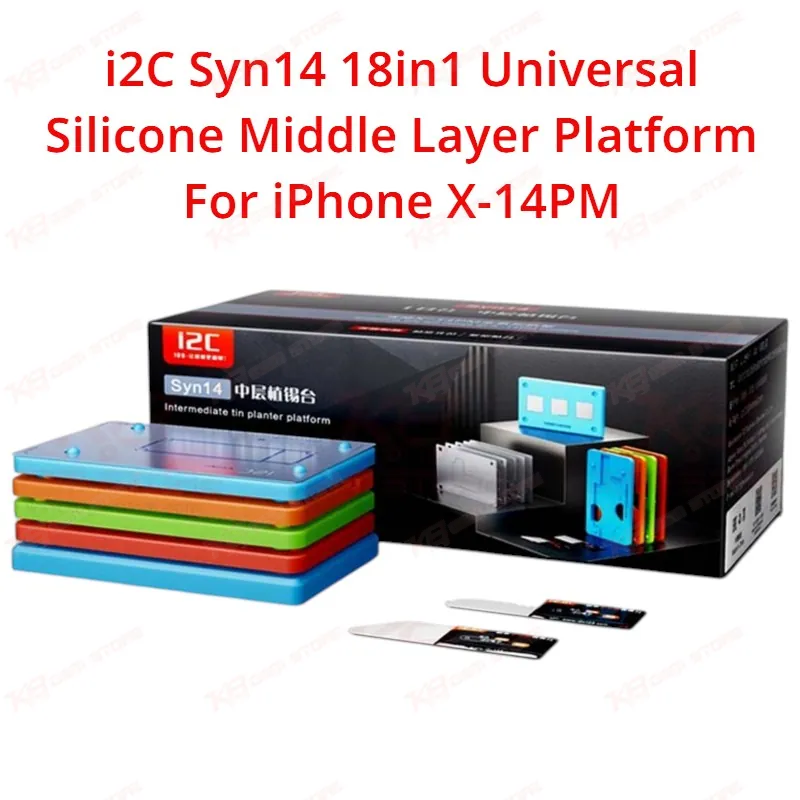
The i2C Syn14 is an 18-in-1 silicone middle layer platform built for reballing and tin planting work on iPhone X through 14 Pro Max boards. Built-in magnets pull the board into place with zero deviation, so solder balls land exactly where they should. The silicone base resists heat and static, protecting your board while you work. One platform covers eighteen models through modular hole positioning, cutting down bench clutter for shops handling mixed iPhone repair jobs. A carbon tin scraper with a non-slip handle ships with the platform for one-step scraping and planting.
⚖️ Weight: 0.7 kg
SKU:MST-IC-233
- Safe & Secure Payment
- Fast Delivery
- WhatsApp Support


Description
FAQ
What is the product name?
The product name is i2C Syn14 18-in-1 Universal Silicone Middle Layer Platform for iPhone X-14PM.
What is the brand of this product?
The brand of this product is i2C.
What is the model of this product?
The model of this product is Syn14.
What is this product used for?
This product is used as a middle layer platform for motherboard reballing and tin planting on iPhone boards.
Which devices are compatible with this product?
This product is compatible with iPhone X through iPhone 14 Pro Max, covering eighteen models on one modular base.
Who should use this product?
This product is suitable for mobile repair technicians, PCB repair specialists, repair shops, service centers, and professional reballing workstations.
Does this platform support both CPU and NAND reballing?
Yes, the magnetic silicone base and steel mesh support reballing work for CPU and NAND chips on supported iPhone boards.
Does the platform come with a tin scraper included?
Yes, a carbon multi-function tin scraper with a drip-glue non-slip handle ships with the Syn14 platform.