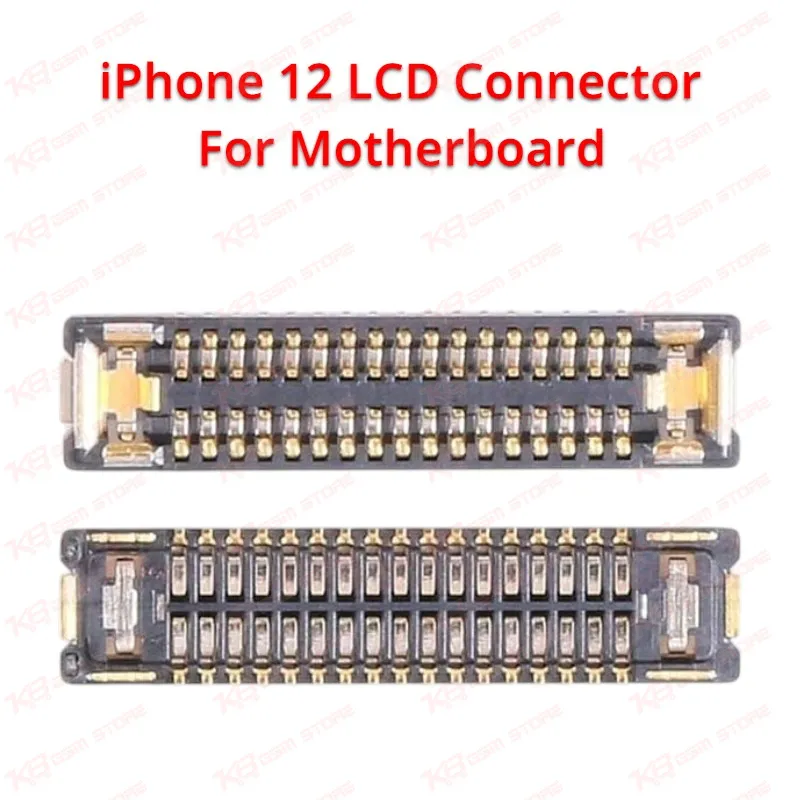
The LCD FPC connector on an iPhone 12 or iPhone 12 Pro motherboard is a small surface-mounted socket, but it carries every signal responsible for turning the display on, driving backlight power, and reading touch input from the digitizer. Technicians who deal with dead phone cases where the board powers on, the phone vibrates on boot, and the battery charges normally, yet the screen stays black, know this connector is one of the first suspects after ruling out the LCD flex itself. Repeated screen replacements, dust buildup, corrosion from liquid exposure, or a hard drop can crack the solder joints under this connector or snap one of its plastic latch arms, and once that happens no LCD, genuine or aftermarket, will register on the board. This 34-pin connector matches the exact footprint used on the iPhone 12 and iPhone 12 Pro logic board, so it drops into the original pads without modifying the trace layout or requiring any jumper wire rework in the majority of cases. During board-level diagnostics, a technician typically confirms this fault by inspecting the connector under a microscope for hairline cracks, checking for missing or lifted pins, or testing continuity from the connector pads back to the display driver circuit. Once a bad connector is confirmed, the repair involves removing the damaged unit with a hot air rework station set to a controlled temperature, cleaning the pads with flux and solder wick to remove old solder, and reflowing the new connector using a fine-tip soldering iron or a rework station with a matching nozzle. Precise alignment matters here, since a shifted or tombstoned connector will cause an intermittent display, a flickering screen, or a digitizer that stops responding to touch even though the picture looks fine. Many Pakistani repair shops encounter this part after a customer reports a hang on logo issue that turns out to be unrelated to software, or after a previous shop attempted a screen swap and left the connector cracked from excessive flex cable pressure. Replacing this connector correctly also resolves cases where the display shows lines, flickers under pressure, or loses touch response in specific areas of the screen, since these symptoms often trace back to a partially broken pin rather than a faulty LCD panel. For technicians running a busy repair bench, keeping this connector in stock avoids downtime between diagnosing a board-level display fault and completing the repair, since sourcing a single connector locally is often harder than sourcing a full screen assembly. The connector is compatible across both the iPhone 12 and iPhone 12 Pro logic boards, since Apple used a shared 34-pin footprint and pinout between these two models, which makes stocking a single SKU practical for shops that service both variants regularly. Installation calls for a steady hand, a preheat station to protect surrounding components, and ESD-safe handling practices, since static discharge or excess heat exposure can damage nearby ICs on a densely packed board. Technicians should always verify board revision and visually match the old connector's pin count and orientation before reflow, since installing a mismatched connector, even one that appears similar, can short adjacent pads or fail to make contact with the display flex entirely. This part is intended for use by trained mobile repair technicians with SMD rework experience and is not a plug-and-play component for general users. When paired with a genuine or good-condition LCD flex assembly, this connector restores full display and touch functionality on boards where the fault has been correctly isolated to this specific socket rather than the display driver IC or backlight circuit.