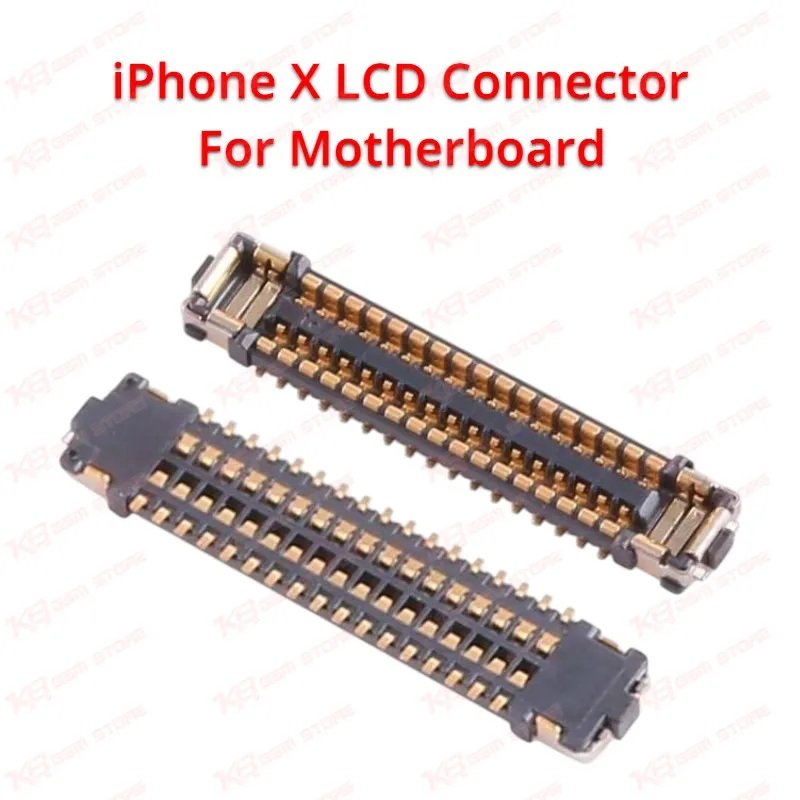
Every iPhone X carries a small but critical surface-mount connector on the logic board known as J5700, and this listing supplies that exact 34-pin LCD FPC connector for technicians who need to replace it after physical or electrical damage. The connector sits directly beneath where the display flex cable plugs into the motherboard, and its job is simple but essential: carry LCD driving signals and digitizer touch data between the screen assembly and the board's display and touch ICs. When even one of its 34 gold contact points lifts, corrodes, or cracks, the phone can show a black screen, partial display, flickering lines, unresponsive touch, or a screen that works only under pressure. Many technicians first suspect the LCD itself, swap in a known-good screen, and still get the same fault — that's usually the moment the FPC connector becomes the prime suspect on the repair bench.Physical damage is the most frequent cause of J5700 failure. Repeated screen removal during LCD or digitizer replacements, drop damage that flexes the board, or a technician prying too aggressively with a spudger near the connector can snap or bend the fine pins. Liquid exposure is the second major cause — even a small amount of moisture ingress around the display seal can creep under the connector and corrode the solder joints over time, leading to intermittent display problems that come and go with board flexing or temperature. In both cases, reflowing the existing connector rarely gives a permanent fix; replacing the connector with a new one restores a clean, reliable contact surface.This is a board-level component, not a plug-and-play part, so installation requires hot air rework equipment, flux, and micro-soldering experience. The old connector needs to be lifted cleanly with hot air without lifting the pads underneath it or damaging nearby SMD components, the pads then need to be cleaned and reballed or reflowed if solder has thinned, and the new J5700 connector is placed and reflowed onto the original footprint. Getting the pin alignment right under magnification matters here — a shifted or bridged pin after reflow can cause a short or a no-display fault even with a brand-new connector, so most technicians work under a microscope for this repair.Because this connector carries LCD and touch data lines rather than power, a bad J5700 connector typically will not cause a "dead phone" that fails to power on — the board will boot and the phone will usually still respond to iTunes/Finder recognition, but the screen output or touch response fails. That distinction helps during diagnosis: if a technician gets no display but the phone still connects to a computer and shows normal current draw, board-side display circuitry — starting with this connector — should be checked before assuming a display driver IC or backlight IC fault.This part is intended for replacement on an existing iPhone X logic board where the original connector is confirmed damaged, corroded, or missing pins, and is not a substitute for the LCD or digitizer flex cable itself. Technicians handling iPhone X board-level repair, liquid damage recovery, or "screen doesn't work but board powers on" cases will find this a routine but necessary stock item for the repair bench.