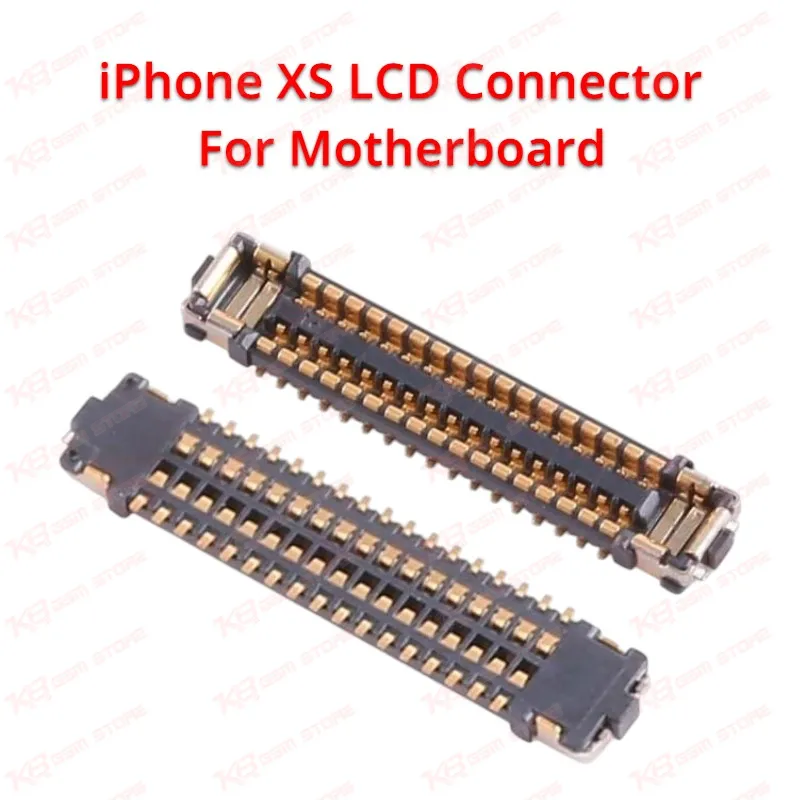
The iPhone XS LCD connector, labeled J5700 on the logic board silkscreen, is the 34-pin interface that carries display power, backlight control, and touch-adjacent data signals between the LCD or OLED assembly and the motherboard. When this connector fails, the phone typically boots normally, the LCD backlight may or may not light up, and the screen stays blank, shows a black display, flickers intermittently, or displays vertical lines even though the LCD panel itself tests fine on another board. Technicians confirm the fault by swapping in a known-good screen; if the same display issue persists, the connector on the board is the likely culprit rather than the flex or the panel. This component addresses that exact failure point without requiring a full motherboard swap. The connector mounts directly onto the J5700 pad location on the iPhone XS motherboard and interfaces with the LCD flex cable that runs from the display assembly. Physical damage is the most common cause of failure in repair shops: bent or missing pins from repeated screen removal, cracked solder joints from board flexing, corrosion from liquid exposure, or lifted pads from aggressive flex insertion and removal during diagnostics. Since this is a fine-pitch, board-level component, replacement requires a hot air rework station set to an appropriate temperature profile, flux, fine tweezers, and a stable microscope or magnification setup to align all 34 pins accurately before reflow. Rushing the reflow or misaligning the connector during placement commonly leads to a repeat failure or a short between adjacent pins, so preheating the board evenly and controlling airflow direction matters as much as the connector quality itself. In a typical repair workflow, this connector fits into the broader LCD and display troubleshooting process: after ruling out the screen, the flex cable, and physical board damage, isolating a bad connector at J5700 is a standard next diagnostic step for a dead display with no visible LCD damage. It also comes up in liquid damage recovery cases, where corrosion at this connector site is a frequent finding during board-level inspection under a microscope. For repair shops handling iPhone XS boards regularly, keeping this connector in stock avoids downtime waiting on a full motherboard part when the fault is isolated to a single component. The connector is compatible with the iPhone XS motherboard variant that uses the J5700 LCD port, and it pairs naturally with related board-level stock such as touch FPC connectors, battery connectors, and other logic board connectors used across the same chipset family. Technicians working ISP, eMMC, or CPU-level repairs on the same board often need this part alongside other connector replacements when a unit has taken physical or liquid damage across multiple pads. Correct installation restores full display function without affecting other board circuits, since the connector only carries LCD-related lines and does not share pins with charging, audio, or RF sections of the board. This makes it a low-risk, high-precision replacement suited to technicians already comfortable with fine-pitch soldering rather than a beginner-level repair task. Sourcing a verified, tested connector reduces the chance of a second failure after installation, which is why quality control before shipping matters for board-level parts like this one. For any Pakistani repair shop running an active iPhone XS repair queue, this connector is a practical stock item to keep on hand rather than an occasional special order.