


ISP Adopter For Medusa
ISP Adopter For Medusa
Regular price
Rs.1,200.00 PKR
Regular price
Sale price
Rs.1,200.00 PKR
Shipping calculated at checkout.
Quantity
Couldn't load pickup availability
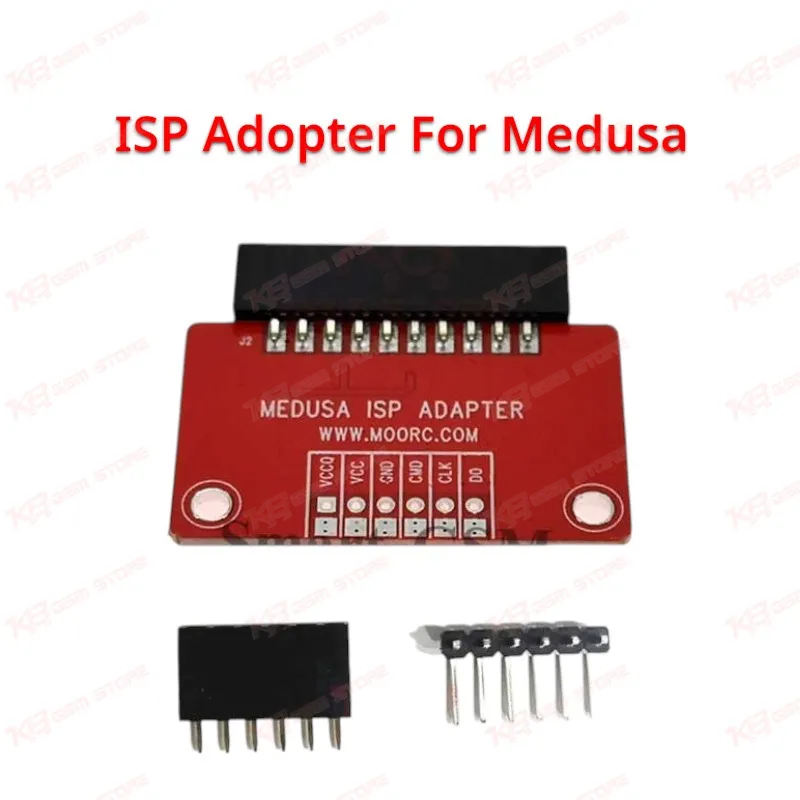
The Medusa ISP Adapter connects directly to the Medusa Pro Box and gives you ISP-mode access to UFS and eMMC memory without lifting the chip off the board. You plug the pin connector into your bench setup, land the test points on the phone's motherboard, and read, write, or erase storage straight through the box's ISP and PWM1-4 modes. It's built for technicians handling dead-after-flash boards, boot loop issues, and hardware faults where desoldering isn't worth the risk. If your Medusa Pro or Medusa Pro II box already handles JTAG and MMC work, this adapter fills the ISP gap on your bench without adding another box to your setup.
SKU:MST-SOLDERING-ACCESSORIES-151
⚖️ Weight: 0.01 kg
- Safe & Secure Payment
- Fast Delivery
- WhatsApp Support


Description
FAQ
What is the product name?
The product name is the Medusa ISP Adapter For Medusa Pro Box.
What is the brand of this product?
The brand of this product is Medusa.
What is this product used for?
This product is used for in-circuit ISP access to UFS and eMMC memory for reading, writing, and erasing data without desoldering the chip.
Which devices are compatible with this product?
This product works with Android devices using UFS or eMMC storage, including Samsung, Huawei, Xiaomi, LG, and Motorola boards with accessible ISP test points.
Who should use this product?
This product is suitable for mobile repair technicians, chip-level repair shops, and service centers doing dead phone and boot repair work.
Does this adapter support ISP mode for dead phones?
Yes, it connects through the Medusa Pro Box to run ISP mode directly on the board, letting you read or recover data on dead-after-flash phones before attempting any further repair.
Does this adapter work with UFS memory or only eMMC?
It supports both, with dedicated PWM1-4 modes for UFS storage alongside standard ISP mode for eMMC, covering the storage types used on most current Android boards.