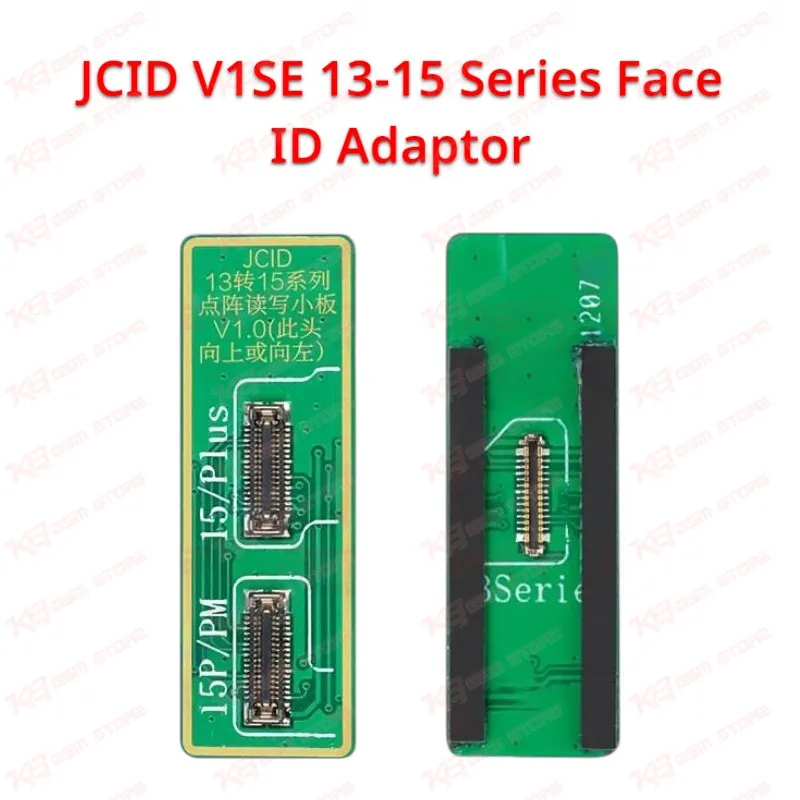
Face ID repair on newer iPhone models depends on precise dot matrix data handling, and every time Apple shifts the pairing structure between the logic board and the TrueDepth camera system, technicians need updated hardware to keep pace. The JCID V1SE 13-15 Series Face ID Adaptor solves this exact problem for shops already running a JCID Face ID board on the IP13 socket. Instead of buying a completely new board to gain iPhone 15 series support, you plug this adapter into your current setup and immediately extend its read/write range to cover the newer series. This adaptor works exclusively with the JCID V1SE or V1S Pro programmer — the standard V1S version is not supported, so confirm your programmer model before ordering. Once connected, the board handles the same dot matrix read and write operations your existing Face ID repair board already performs, just extended to the iPhone 15 lineup. On your repair bench this means you can take a phone with a dead Face ID module, a "Move higher/lower" alignment issue, or a Face ID system flagged after a screen or camera swap, and run the same activation workflow you already know, now covering iPhone 13 through 15 series devices from one board setup. For technicians who see a steady mix of iPhone 13, 14, and 15 series repairs, this adapter keeps you from tying up capital in a second full board just to handle the newer generation. It slots into your IP13 socket the same way your board already expects a connection, so there's no rewiring or custom soldering required for a basic setup — you're extending function, not rebuilding your rig. Pakistani repair shops handling high device turnover often run into a Face ID fault after a logic board swap, a "dead after flash" scenario following software work, or a module that stopped responding after physical damage. In each case, the workflow starts the same way: connect the phone through your Face ID board, run diagnostics through the V1SE or V1S Pro software, and use read/write functions to restore or reprogram the dot matrix pairing. This adapter simply widens the pool of devices that workflow covers. Because it's an add-on rather than a full board, setup is fast — most technicians have it connected and ready between jobs rather than losing bench time to a new tool learning curve. It's worth noting this adapter is not a standalone repair tool. You need the V1SE or V1S Pro programmer and your existing Face ID board on hand; the adaptor extends that combination rather than replacing any part of it. For shops that already invested in the JCID ecosystem, this is the low-cost way to stay current as Apple releases new iPhone generations, without the recurring expense of buying an entirely new Face ID board every product cycle. Given its role as a connector-level add-on, expect it to ship without a warranty or return coverage, which is standard across this product category from JCID and its resellers.