


Brand:
KAILIWEI
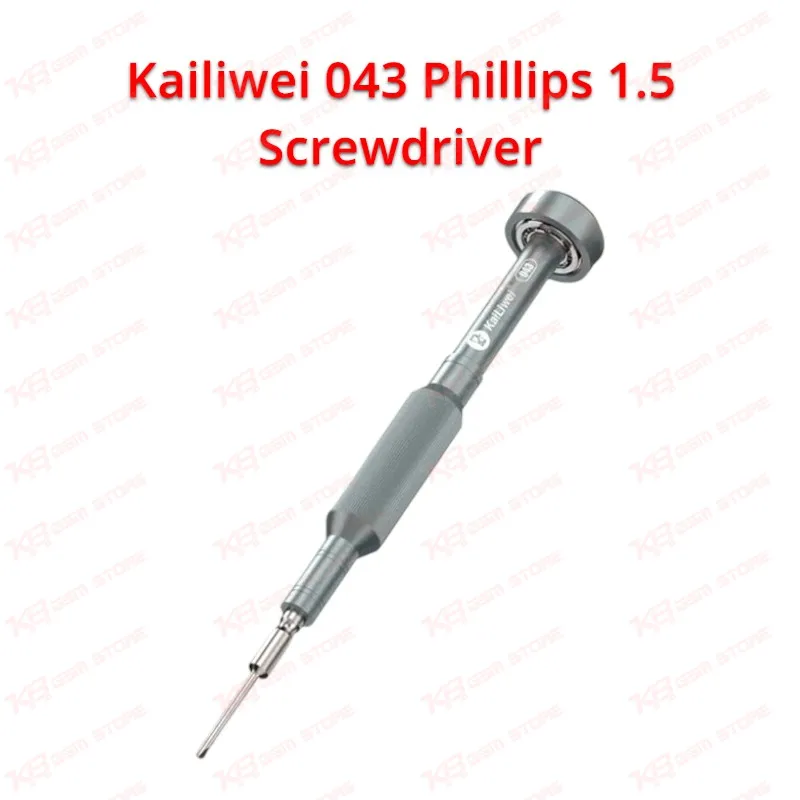
Kailiwei 043 Phillips 1.5 Screwdriver
Kailiwei 043 Phillips 1.5 Screwdriver
Regular price
Rs.900.00 PKR
Regular price
Sale price
Rs.900.00 PKR
Shipping calculated at checkout.
Quantity
Couldn't load pickup availability
The KAILIWEI 043 Phillips 1.5 precision screwdriver gives you a reliable driver for the small cross-head screws found inside smartphone housings and PCB assemblies. Built with an anti-slip aluminum alloy handle and an antirust finish, this driver is made for technicians who open dozens of devices a day and need a tool that won't corrode or slip mid-job. The 1.5mm Phillips tip matches the PH000 screw size commonly used on phone back covers, motherboard shields, and internal brackets. It's a straightforward, no-nonsense addition to any repair bench or technician's toolkit where precision and grip matter more than bulk.
SKU:MST-SOLDERING-ACCESSORIES-439
⚖️ Weight: 0.03 kg
- Safe & Secure Payment
- Fast Delivery
- WhatsApp Support


Description
FAQ
What is the product name?
The product name is KAILIWEI 043 Phillips 1.5 Precision Screwdriver.
What is the brand of this product?
The brand of this product is KAILIWEI.
What is the model of this product?
The model of this product is 043.
What is this product used for?
This product is used for removing small Phillips cross-head screws during phone disassembly and repair.
Which devices are compatible with this product?
This product is compatible with any smartphone or small electronic device using PH000-class 1.5mm Phillips screws, such as back covers, mid-frames, and shield plates.
Who should use this product?
This product is suitable for mobile repair technicians, repair shops, service centers, and professional users.
Does the 1.5 tip fit standard phone back cover screws?
Yes, the 1.5mm Phillips tip matches the PH000-size screws commonly used on smartphone back covers and mid-frame brackets.
Is the handle safe for use near soldering or rework stations?
The aluminum alloy anti-slip handle and antirust finish make it suitable for bench use around flux and cleaning solvents typical of soldering and rework stations.