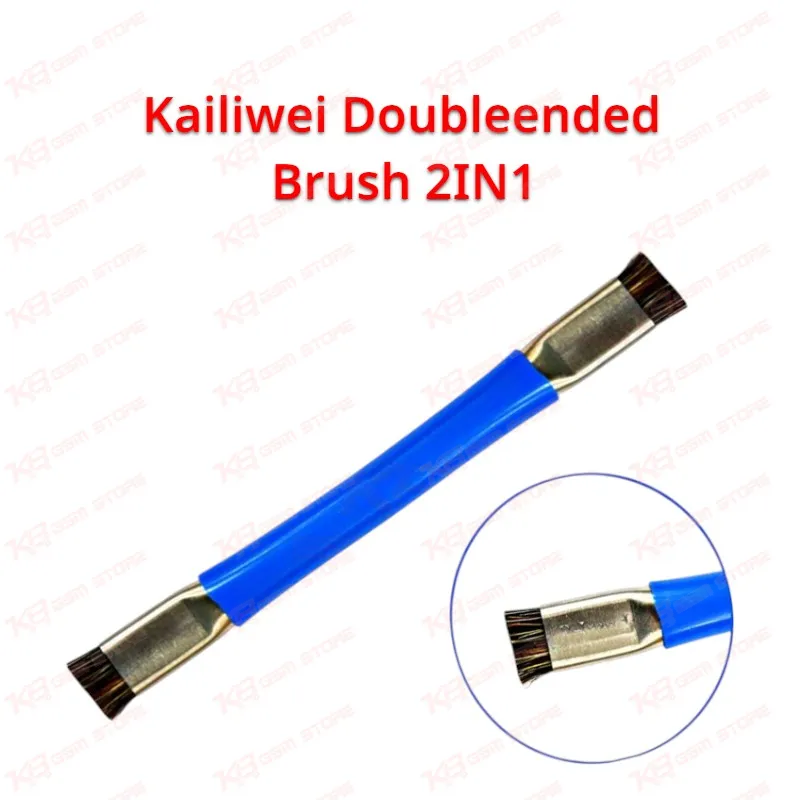
Every GSM technician knows that a clean board is the first requirement before diagnosing a dead phone, doing IC change karna, or preparing a pad for reballing. The Kailiwei Double-Ended Anti-Static Brush 2IN1 exists for exactly that moment on the bench, when dust, flux, or old paste sits between you and an accurate repair. Instead of carrying separate brushes for rough and fine cleaning, this tool puts both jobs into one handle, so you can flip ends mid-task without breaking your workflow. The anti-static bristle design matters more than it looks on paper. Mobile motherboards carry sensitive PMICs, CPU ICs, and RF components that can be damaged by uncontrolled electrostatic discharge, so an ESD-safe brush lets you clean directly around active components without introducing new faults into a board that was already giving you trouble. On a typical repair bench, this brush earns its place during board-level diagnostics, where visibility is everything. Before you can trace a short, confirm a burnt track, or check a jumper point after a jumper lagana job, you need the surface free of dust and grime. The double-ended layout means you start with the coarser side to clear general buildup around connectors, charging ports, and IC edges, then switch to the finer side for detail work near solder pads and BGA sites. This kind of staged cleaning reduces the risk of scratching delicate pads while still getting into corners that a single flat brush would miss. Flux residue is another daily headache. After soldering or reballing work, boards are left with sticky, sometimes corrosive flux traces around the joint. Left uncleaned, this residue attracts moisture and dust over time, which can eventually cause corrosion or intermittent faults that show up as unexplained hardware fault symptoms weeks later. Running the brush over freshly soldered joints right after rework, while the flux is still workable, keeps pads clean and makes future rework on the same board easier because you're not fighting old residue buildup. For technicians who handle software marna work as often as hardware repair, this brush still earns its spot because dust and debris around connectors and charging ports can cause false readings on multimeters or unreliable connections in a test box, muddying your diagnosis before you even get to the software side. A clean board removes that variable, so if a phone is still showing a boot loop issue or hang on logo after cleaning, you know the problem sits elsewhere. The compact handle and dual-head design also make this brush practical for repair shops running high device turnover. It doesn't take up dedicated storage space, it doesn't need charging or calibration, and it works across a wide range of tasks — from keyboard and connector cleaning to fine IC-area detailing — without needing a separate tool for each job type. For shops in Lahore, Karachi, and Islamabad running back-to-back repairs daily, having a reliable, ESD-safe cleaning tool on hand cuts down the small delays that add up over a full day of dead phone and charging issue repairs. This brush pairs naturally with your existing PCB fixture, silicone mat, and rework station setup, filling the gap between soldering and final board inspection so every repair leaves the bench looking as clean as it works.