


Brand:
KAILIWEI
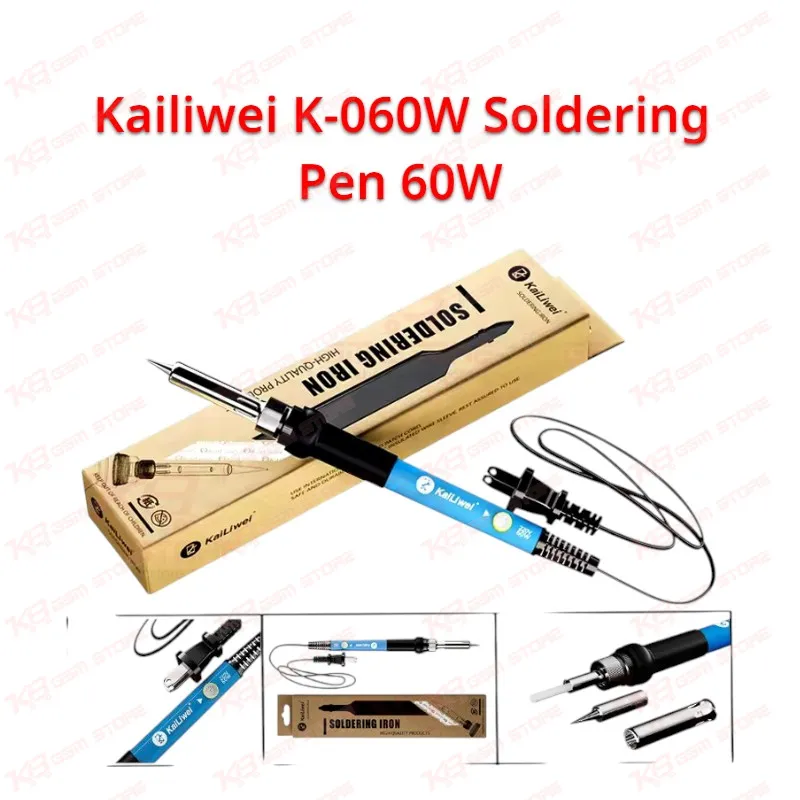
Kailiwei K-060W Soldering Pen 60W
Kailiwei K-060W Soldering Pen 60W
Regular price
Rs.750.00 PKR
Regular price
Sale price
Rs.750.00 PKR
Shipping calculated at checkout.
Quantity
Couldn't load pickup availability
The Kailiwei K-060W is a 60W internal-heat soldering pen built for mobile phone PCB and board-level repair work. You get a ceramic heating core, an iron-plated tip, and a temperature range from 200°C to 450°C, so you control the heat for delicate IC legs, jumper wires, and connector pins without burning the board. The stainless steel body and ergonomic handle keep the pen steady through long soldering sessions on your repair bench. Technicians reach for this tool for jumper lagana work, dead board repairs, charging port pin soldering, and general PCB rework where a full soldering station is not practical.
SKU:MST-SOLDERING-ACCESSORIES-366
⚖️ Weight: 0.25 kg
- Safe & Secure Payment
- Fast Delivery
- WhatsApp Support


Description
FAQ
What is the product name?
The product name is Kailiwei K-060W Internal Heat Adjustable Temperature Soldering Pen.
What is the brand of this product?
The brand of this product is Kailiwei.
What is the model of this product?
The model of this product is K-060W.
What is this product used for?
This product is used for soldering and desoldering on mobile phone PCBs, including IC legs, jumper wires, connectors, and charging port pins.
Which devices are compatible with this product?
This product is universal for mobile phone PCB and board-level repair work and is not tied to a specific device or brand.
Who should use this product?
This product is suitable for mobile repair technicians, repair shops, service centers, and professional users.
What temperature range does the Kailiwei K-060W support?
It supports an adjustable temperature range from 200°C to 450°C.
Can this soldering pen handle lead-free solder for mobile PCB work?
Yes, the ceramic heating core and iron-plated tip make it suitable for lead-free soldering on sensitive semiconductors.