


Brand:
KAILIWEI
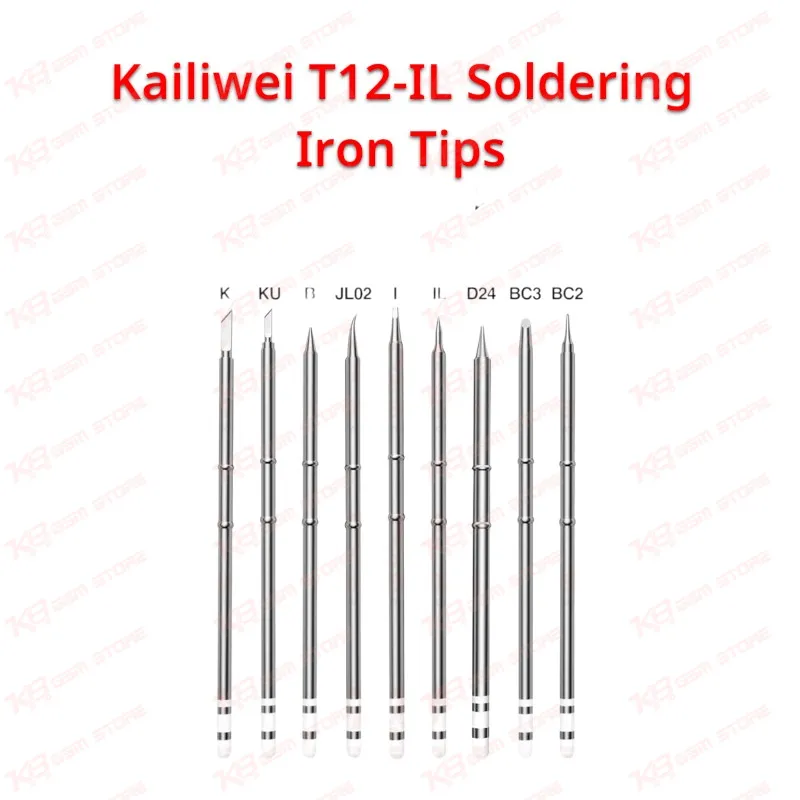
Kailiwei T12-IL Soldering Iron Tips
Kailiwei T12-IL Soldering Iron Tips
Regular price
Rs.800.00 PKR
Regular price
Sale price
Rs.800.00 PKR
Shipping calculated at checkout.
Quantity
Couldn't load pickup availability
The Kailiwei T12-IL is a conical fine soldering iron tip built for T12 series stations with an integrated heating core and built-in thermocouple. It delivers a 70W power rating on 0-24V, with 8±0.5Ω heating core resistance and ≤2mV ground voltage for stable, low-noise operation on sensitive PCB work. The ultra-fine conical shape makes it suitable for narrow-pitch soldering on mobile phone motherboards, where a technician needs precision instead of a bulky tip. It fits directly into 951-type T12 soldering stations, so you get quick installation without extra adapters on your repair bench.
SKU:MST-REWORK-STATION-24
⚖️ Weight: 0.3 kg
- Safe & Secure Payment
- Fast Delivery
- WhatsApp Support


Description
FAQ
What is the product name?
The product name is Kailiwei T12-IL Conical Fine Soldering Iron Tip.
What is the brand of this product?
The brand of this product is Kailiwei.
What is the model of this product?
The model of this product is T12-IL.
What is this product used for?
This product is used for fine-pitch soldering on mobile phone motherboards, including IC legs, micro components, and narrow-pitch connectors.
Which devices are compatible with this product?
This tip fits T12/951-type soldering stations and works universally across mobile phone PCBs during fine-pitch repair work.
Who should use this product?
This product is suitable for mobile repair technicians, repair shops, service centers, and professional users.
Does the T12-IL work on my Kailiwei T12 soldering station?
Yes, the T12-IL is a direct-fit cartridge for 951-type T12 stations, including Kailiwei's own T12 soldering station line, with no adapter needed.
What is the safe working temperature range for the T12-IL tip?
Soldering is best done between 300-380°C; running continuously above 380°C speeds up oxidation and shortens the heating core's life.