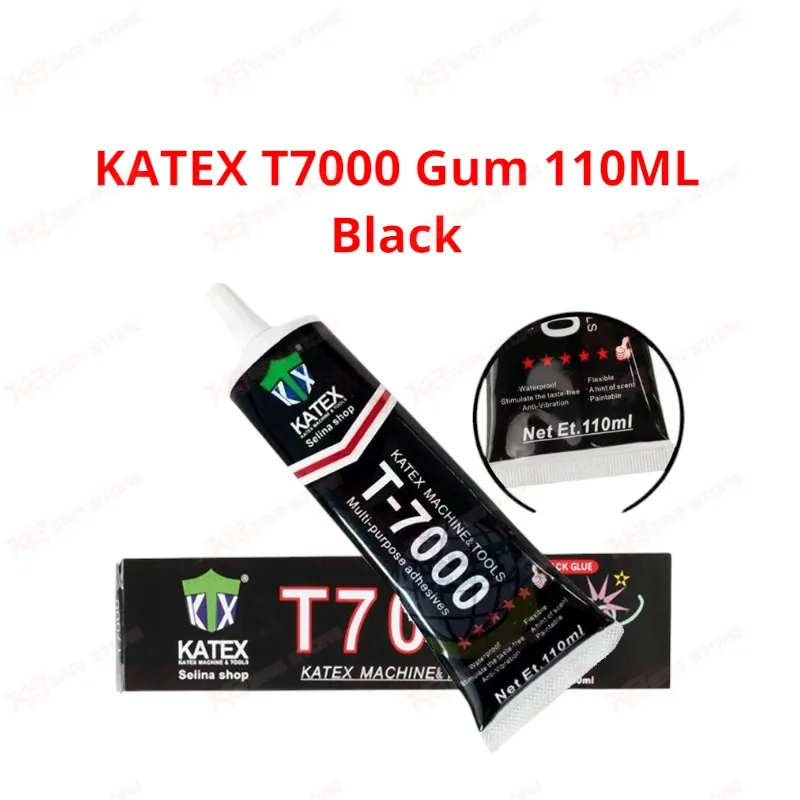
Katex T7000 glue is a black, industrial-grade multi-purpose adhesive that mobile repair technicians rely on for jobs where a strong, semi-flexible bond matters more than a rigid one. Unlike epoxy or super glue that hardens brittle and cracks under stress, T7000 cures into a rubber-like bond that flexes slightly with the material it's applied to, which is exactly why it has become a standard choice for phone frame and LCD assembly work rather than a general hardware-store adhesive. In a typical repair workflow, this glue sits at the assembly and sealing stage, used after screen separation, frame cleaning, or component replacement to put the device back together with a bond that survives drop shock and daily flexing better than stiffer alternatives. You get one of the most common applications in touch screen frame bonding, where the glue seals the gap between the LCD assembly and the mid-frame, replacing the factory adhesive strip that gets destroyed during screen separation. Back cover and battery door repair is another frequent use, especially on phones with glass or metal backs where the original adhesive tape has lost its grip after a battery swap. Camera lens and flash lens repair benefit from T7000 too, since the black color blends into most camera housings and the bond holds up against vibration from daily use. Speaker mesh, charging port housing, SIM tray components, and small internal brackets also get fixed with this glue when a screw isn't an option and standard cyanoacrylate glue would crack on impact. On your repair bench, the key advantage over clear silicone-based adhesives is drying behavior — T7000 skins over within minutes and reaches a workable bond within a few hours, letting you move to the next job without long clamp times, while full cure strength develops over roughly 24 to 48 hours depending on ambient humidity and the thickness of the bead applied. The black pigmentation matters practically, not just cosmetically: on dark-bezel phones, black glue visible through a thin display gap doesn't stand out the way clear or white adhesive would, so the repair looks factory-clean once the frame is reassembled. Surface compatibility is broad — glass, aluminum, stainless steel, ABS plastic, silicone rubber, and ceramic all bond well, which is why the same bottle sees use for jewelry setting, small electronics repair, and general DIY fixing beyond phone workshops. For repair shop owners buying in bulk, the 110ML size is a meaningful upgrade from the small tubes most retail customers buy — a single bottle covers dozens of frame-bonding and back-cover jobs before running dry, which reduces per-repair material cost and cuts down on how often a technician has to stop mid-job because the bottle ran empty. Application technique affects results directly: a thin, even bead along the frame edge bonds faster and cleaner than a thick pool, and pressing the assembled parts together for the first few minutes after application gives the strongest initial hold. Ventilation matters during use since the solvent carrier has a noticeable odor until it flashes off, so most shops keep a bottle at a ventilated bench station rather than in a closed drawer. For a shop handling frame reassembly, back cover repair, or general bonding work across multiple repair tickets a day, keeping a 110ML bottle of T7000 on the bench removes one of the most common bottlenecks in reassembly — running out of adhesive mid-repair.