


KATEX T8000 Gum 110ML White
KATEX T8000 Gum 110ML White
Regular price
Rs.1.00 PKR
Regular price
Sale price
Rs.1.00 PKR
Shipping calculated at checkout.
Quantity
Couldn't load pickup availability
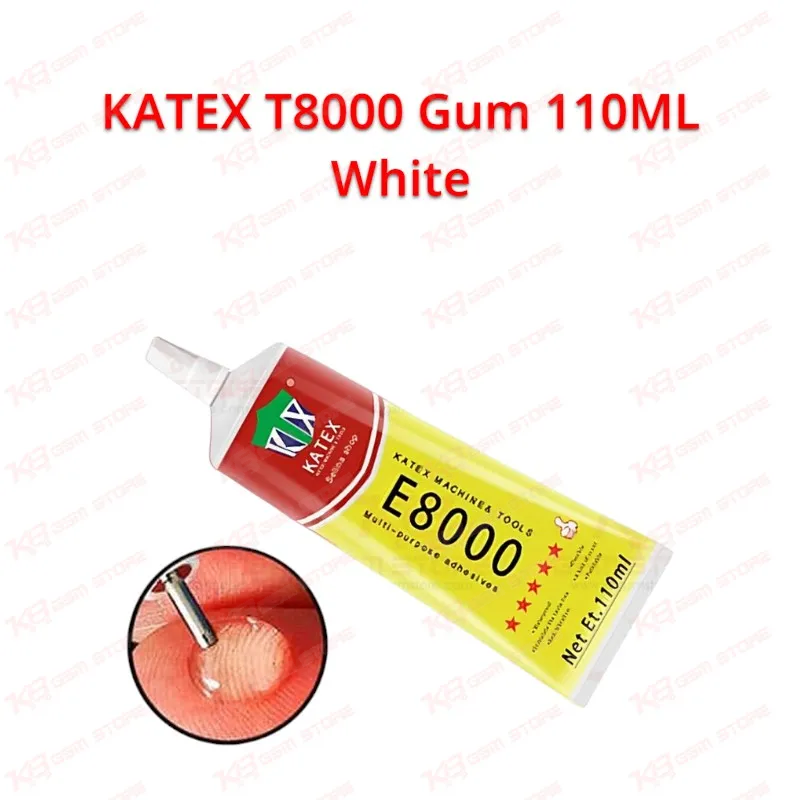
KATEX T8000 Gum 110ML White gives repair technicians a strong, flexible adhesive for bonding phone screens, frames, and small components on the repair bench. This glue cures into a soft, semi-solid bond that holds up under daily handling without cracking. Technicians use it for LCD frame bonding, touch screen fixing, and general phone repair jobs where a flexible hold matters more than a rigid one. The white finish blends into light-colored device frames, so your repair does not leave a visible seam. Pack size runs 110ML, enough for dozens of repair jobs before you need a refill for your workshop.
SKU:MST-SOLDERING-ACCESSORIES-397
⚖️ Weight: 0.1 kg
- Safe & Secure Payment
- Fast Delivery
- WhatsApp Support


Description
FAQ
What is the product name?
The product name is KATEX T8000 Gum 110ML White.
What is the brand of this product?
The brand of this product is KATEX.
What is the model of this product?
The model of this product is T8000.
What is this product used for?
This product is used for bonding phone screens, frames, and small components during mobile repair work.
Which devices are compatible with this product?
This product is compatible with smartphones, tablets, and general electronics housings — it is a universal adhesive, not tied to a specific device model.
Who should use this product?
This product is suitable for mobile repair technicians, repair shops, service centers, and professional users.
How long does KATEX T8000 take to fully cure after applying it on a screen frame?
Surface drying starts within 3-5 minutes, and full curing is achieved within 24-48 hours at room temperature.
Can KATEX T8000 be used on both glass and plastic phone frames?
Yes, this adhesive bonds effectively to glass, plastic, and metal surfaces, making it suitable for most phone frame and back cover repairs.