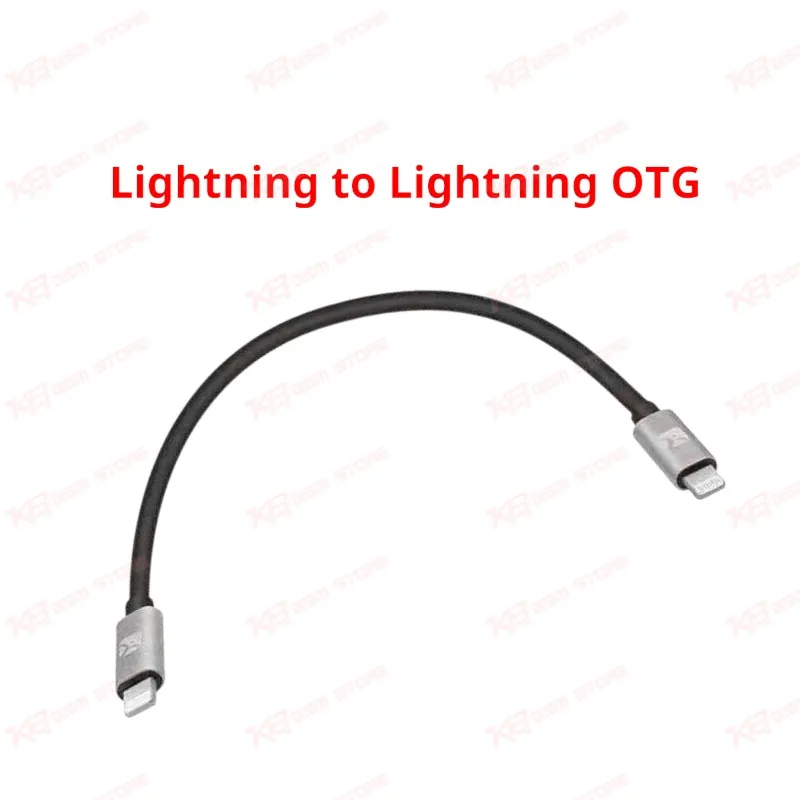
Setting up a new iPhone for a customer used to mean relying on iCloud or a shaky Wi-Fi transfer that could take hours depending on the data load. The Lightning to Lightning OTG Data Migration Cable solves that problem by giving both devices a direct wired connection, so the transfer runs at a stable, predictable speed regardless of network conditions in the shop.The cable has two distinct ends, and getting them right matters for the transfer to start correctly. The "Host" end plugs into the old iPhone, the device that already holds the data you're moving. The "Logo" end plugs into the new iPhone, the device being set up. Once connected, powering on the new iPhone and placing it near the old one triggers Apple's Quick Start screen automatically, prompting the technician or customer to continue with their existing Apple ID.From there, the two devices pair through the on-screen animation step, where the old iPhone's camera centers on a pattern displayed on the new device. After pairing confirms, the new iPhone asks whether to restore from the old device directly. Choosing this option starts the wired transfer, moving contacts, photo libraries, message history, installed apps, health data, and system settings without touching a computer, iTunes, or Finder.For a repair shop, this is faster bench work. A wireless migration can crawl when a customer's photo library runs into tens of gigabytes, and shop Wi-Fi shared across multiple technicians doesn't help. A wired connection through this cable keeps transfer speeds consistent, so a technician can queue several migrations back to back without babysitting each one for hours. It also removes any dependency on the shop's internet connection being stable or fast enough for large transfers.Compatibility depends on the iOS version running on both handsets rather than a specific phone model list. Both the old and new iPhone need iOS 12.4 or later for the direct migration feature to appear during setup. This covers the vast majority of iPhones currently coming through repair shops and upgrade counters, from older Lightning-port models through the newest devices that still ship with a Lightning connector. Checking the iOS version under Settings, General, About, Version before starting the transfer avoids wasted time if either device needs an update first.This cable earns its place in a repair technician's toolkit alongside data recovery tools, ISP boxes, and diagnostic equipment. It handles the common walk-in scenario of a customer buying a new phone and needing everything moved over cleanly, without opening the device or touching internal hardware. It also serves as a backup option when a customer's iCloud storage is full or their Apple ID has sync issues that block a wireless restore.Build quality matters here since the cable sees repeated plug and unplug cycles across many customer transfers in a working shop. A properly shielded, reinforced connector reduces the chance of a failed or interrupted transfer mid-session, which is the last thing a technician wants when a customer is waiting on their new phone. Keeping this cable on the bench next to other iPhone setup accessories turns a task that once meant explaining Wi-Fi transfer delays to a customer into a five to ten minute wired handoff.