


Brand:
MAGMA
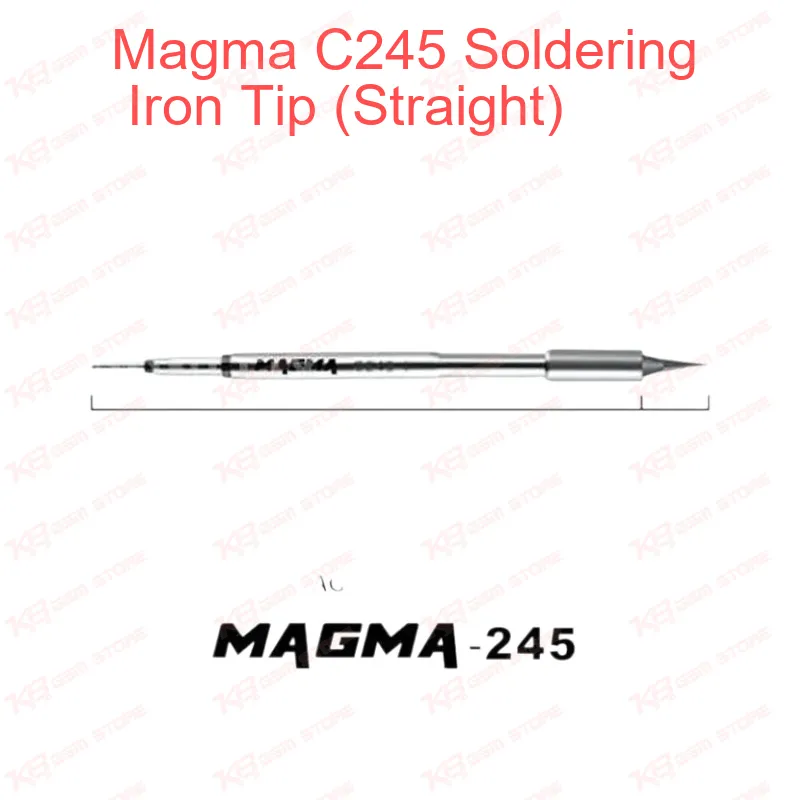
Magma C245 Soldering Iron Tip (Straight)
Magma C245 Soldering Iron Tip (Straight)
Regular price
Rs.1,200.00 PKR
Regular price
Sale price
Rs.1,200.00 PKR
Shipping calculated at checkout.
Quantity
Couldn't load pickup availability
The Magma C245-I is a straight, conical precision soldering tip built for the C245 tip-and-heater system used across JBC-compatible stations like AIFEN, SUGON, AISUN, and AIXUN. Its slim profile gives you tight control over solder flow on small pads, ICs, and cramped motherboard areas, making it a daily-use tip for GSM repair benches doing SMD work, IC change, and PCB-level soldering. Built with an oxygen-free copper core and multi-layer plating, it heats fast and resists corrosion during long shifts. A straightforward, dependable replacement tip for any technician running a C245-based iron.
SKU:MST-SOLDERING-ACCESSORIES-571
⚖️ Weight: 0.01 kg
- Safe & Secure Payment
- Fast Delivery
- WhatsApp Support


Description
FAQ
What is the product name?
The product name is Magma C245-I Straight Soldering Tip.
What is the brand of this product?
The brand of this product is Magma.
What is the model of this product?
The model of this product is C245-I.
What is this product used for?
This product is used for precision soldering, IC rework, and PCB-level repair on mobile phone motherboards.
Which devices are compatible with this product?
This tip is compatible with soldering stations and irons running the C245 tip-and-heater system, including JBC-compatible units from AIFEN, SUGON, AISUN, KAISI, and AIXUN.
Who should use this product?
This product is suitable for mobile repair technicians, repair shops, service centers, and professional users.
Does this tip fit my AIFEN or SUGON soldering station?
Yes, if your station runs the C245 tip system, this Magma C245-I tip fits directly without an adapter.
Can this tip handle fine IC and small pad soldering?
Yes, the straight/conical Type I shape is built specifically for precise work on small pads, ICs, and tightly packed SMD components.