


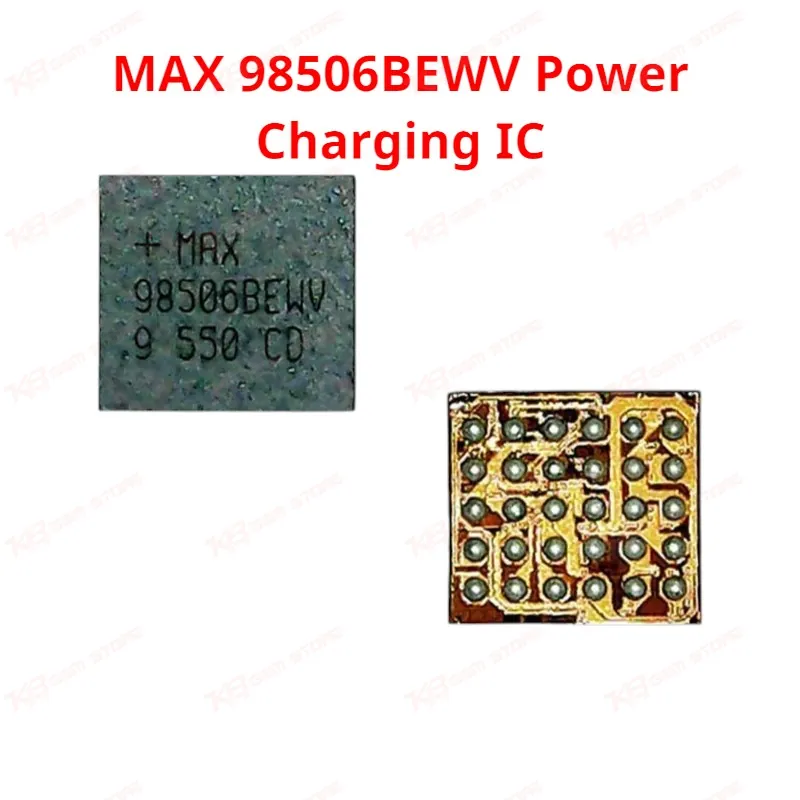
MAX 98506BEWV Power Charging IC
MAX 98506BEWV Power Charging IC
Regular price
Rs.350.00 PKR
Regular price
Sale price
Rs.350.00 PKR
Shipping calculated at checkout.
Quantity
Couldn't load pickup availability
The MAX98506BEWV is a Maxim Integrated board-level IC used on Samsung Galaxy S7 and S7 Edge motherboards, commonly known in the repair trade as the "Power Charging IC." Technicians reach for this chip when a board shows no sound, distorted audio, or is bundled into a wider charging-fault diagnosis during board-level repair. Built for SMD reballing and hot air rework, it suits professional repair benches in Lahore, Karachi, and Islamabad handling Samsung motherboard faults. Genuine function verified against device teardown data, so you know exactly what you're soldering onto the board before you commit bench time to a dead or faulty phone.
⚖️ Weight: 0.01 kg
SKU:MST-IC-117
- Safe & Secure Payment
- Fast Delivery
- WhatsApp Support


Description
FAQ
What is the product name?
The product name is MAX98506BEWV Power Charging IC.
What is the brand of this product?
The brand of this product is Maxim Integrated.
What is the model of this product?
The model of this product is MAX98506BEWV.
What is this product used for?
This IC is used to resolve audio faults such as no sound or distorted output, and factors into charging-related board diagnosis on Samsung Galaxy S7-series motherboards.
Which devices are compatible with this product?
This IC is confirmed for Samsung Galaxy S7 and Samsung Galaxy S7 Edge motherboards, with some suppliers also listing it for S8 / S8+ boards.
Who should use this product?
This product is suitable for mobile repair technicians, repair shops, service centers, and professional users.
Is the MAX98506BEWV actually a charging IC or an audio IC?
It is Maxim Integrated's audio amplifier IC per device teardown data, but the repair trade commonly calls it the Power Charging IC due to its board position and role in charging-fault diagnosis.
Does replacing this IC fix a phone that won't charge at all?
Not on its own — check the PMIC, charging port, and battery connector first, since this IC's confirmed function is audio, not power delivery.